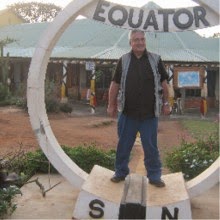
Tuesday, May 17, 2011

Security?

Security, what the word can mean

In 2008 I sent a report to a new colleague in UK about there being a problem with security where I happened to be at the time. Something about what I wrote was not clear and in the following exchange of messages I became aware of the assumptions that I had built into the word security. 

My assumption was that she thought of security, like I did, either as a problem, as in ‘we have security problems’ or as a group of people as in ‘we were stopped at the airport by Security’.

In fact, since she was new to the support post she was in, she had been puzzled by the way I had used the word.  For her the word security referred to something good, nice and warm, as in ‘the security of a mother’s love’ or the ‘in the security of his home’. This is security meaning ‘safeness’.

For many in the countries where I work, the lack of security, insecurity, is something real and palpable whether it is physical (danger of death, injury, imprisonment, robbery or rape), economic, as in the term ‘food security’ or in some way related to ones lack of certainty about the future. This could be simply being unsure that you will ever finish your education, or that it will be worth anything when you finally get through your years of schooling in the face of closures, poor teaching and unreliable exams. [1]

We also have Security with a capital letter.  Most people working in Africa or the Middle East need no explanation of ‘Security’. At best it means your house-guards but often it means those men with menacing dark glasses who cause everyone trouble, will never identify themselves, and can prevent you from going about your legitimate business or even ‘disappear you’..

In Congo Security can abruptly summon you to their office where you will be kept waiting, not allowed to be accompanied in the interview, not go in with your mobile phone. They may be doing it for National Security, but most often they (or your enemy) are doing it so you will pay them to stop harassing you. 

In Sudan they were people who would never show any identity card who were as often as not carrying out a personal agenda or enforcing a parallel regime which had little to do with the government officially in power. That was in the time of democracy. Later the regime and Security somehow merged. And the security services, as so often, became multiple, with overlapping functions and loyalties to different factions.

Often ‘security’ is invoked to prevent free speech and to ‘get round’ inconvenient laws.  And always, Security is the employer of young men, partly educated who could just as well have been members of gangs in the streets, or to be more optimistic, small business men.

My first houseboy in Uganda worked, he thought, for Uganda security in Nairobi and smuggled a gun for them. He was shot by the police and no one knows even where he is buried.  

.


[1] FOOTNOTE In English, secure, sure, certain, peaceful and safe have subtly different meanings but in many languages the same word can cover many of these aspects. So, in Swahili usalama is safety and security and can therefore mean peace.   

Sunday, April 24, 2011

London now that April's here


17 April 2011:  Here in UK everyone seems to have started holidays – Easter next weekend, then the royal wedding.  I passed through London yesterday and it was so crowded i was quite stressed!  Trains, underground, more trains ...    The other day a friend and I went to see the Titanic Artefacts exhibition of objects found at the bottom of the sea. As you enter you are given a boarding card with a real passenger’s name on it. At the end you find out if you lived or died.  There is also an exhibition of 3D TV – still using glasses, though.

Also met three old friends, (not looking old, I must say!) from my Nigeria days. One in Brighton, two in Dublin.   Train and boat still the most civilised way to go to Dublin, and very cheap.

A lot of reminiscing about the time we were all in Mubi.  Some old photos to look at.

18 April: The streets and gardens so beautiful in a warm sunny spring;

21st April: in contrast back in Uganda it is rain, rain, rain. Good for farmers!  I think it is the contrast in weather coupled with a freezing BA flight which has given me a cold or flu!


Get your own Visited Countries Map from Travel Blog

Sunday, April 03, 2011

When you look for it the Libyan connection runs deep. Hotels, banks, Oil Libya petrol stations. Ugandans are even finding it in their fridges. Splash fruit juices may not have Gaddafi's face on the box, but his country's oil money runs the factory.  (Will Ross, BBC).

Friday, April 01, 2011

Drove on Wednesday to Bukoba Tanzania to see the first school I ever taught at ... in 1968. Looks shabby now, though it was one of the top schools in TZ at the time, having been a Christian Brothers school called St Thomas More before the government of Nyerere took it over. In those days we went from Uganda by steamer. It taught several now-prominent Tutsis who were refugees and used to teach aeronautical engineering.  where I was learning to be a teacher at Makerere, Strangely, no one remembered that or that there had been a small plane, crashed some time at the local airstrip to practise on.


From a friend in Cote d'Ivoire: Concerning our Duekoué friends and colleagues, they are all alive... they have abandoned their home and residence and find refuge to the catholic mission, since the last attacks of the forces of Pro ouattara forces. All ICLA teams and Yapi are in Abidjan and city around... Things are so confused here. I hope that things will recover with the least violence as possible... There are many weapons in circulation at this time and in case of civil war, things will be catastrophic

Wednesday, February 23, 2011


Entebbe, 1300h


I have just received an sms security advisory from the High Commission (first time ever) telling me that there is tension around Bat Valley / Bombo road.  


There has already been serious trouble at Rubaga and in the city centre. People turned up at 7 am at many polling stations to find the ballot boxes  already stuffed with Ssematimba (NRM) votes.


Even the state broadcaster UBC was scandalised especially when one of their own reporters was attacked in Rubaga reputedly by thugs circulating in matatus – she appeared in the studio with a great gash on her cheek.   


Just watched the Electoral Commission press conference – Kampala mayoral election postponed. 


Electoral commissioner very frank about shortcomings, citing ballot stuffing and connivance. Some election officers arrested. .  No one will believe that the same thing didn’t happen last Friday!   


The problem of an Opposition mayor and the president’s promise to emasculate the Mayor’s office by appointing an Executive manager of Kampala over his head  is partly behind it.  


Stuff expat aid workers like

With thanks to the Expat Aid Worker and John Ashworth who forwarded this to me.
BEGIN

February 16, 2011
by Shotgun Shack
Expat Aid Worker practitioners love feeling like they are supporting
locally-led development processes. They love being one with the people
and steering them towards self-sufficiency. They love building
capacity in local and national institutions and mainstreaming core
development principles like gender, human rights, sustainability,
participation, and local ownership during life-saving meetings in
communities, hotels, and retreat centers around the world.
They envision themselves as catalysts, animating people to travel down the long road to development; as facilitators, helping things along by their mere presence, asking the right questions at the right time and
then allowing things to naturally flow towards what local people want
to discuss.
After repeated attempts at facilitation, however, even the most noble Expat Aid Workers realize that if they want to succeed at their job, rather than facilitatation, they need to learn the gentle art of
facipulation: a delicate blend of facilitation (catalyzing, easing and
supporting conversations and actions around themes and issues
important to the community and/or program participants) and
manipulation (steering conversations towards their INGO’s established
themes and goals, and ensuring that actions and decisions made by
local people support their INGO’s interests and happen within the time
frame stipulated by their donors).
We’ve listed a few of our favorite workshop facipulation techniques here:
The workshop set-up. When selecting facipulants for the workshop,
choose those that you know from previous experience
a) agree with you,
b) understand what your agency wants to achieve and
c) have a stake in a future project that they don’t want to lose out on by being difficult.
It’s helpful if facipulants appear to represent a diverse
group, but that their diversity does not include diversity of opinion.
It’s also a good idea to decide on the core learning objectives or
meeting outputs ahead of time, and print them nicely in color on A-4
or a 3-fold brochure. The more official things look, the less likely
people will be to think they can change them.
Paying a per diem. This small token of appreciation (along with
providing a very healthy-sized breakfast, lunch, two full snacks, a
lot of soda, a cap, a t-shirt, a pen, a notebook, a nice workshop themed bag and other bits of swag) for facipulants helps them to help you steer the meeting where you want it to go. They must, of course,
want to be asked back to the next meeting.
Group work. Assign people to groups ahead of time, and plant someone
who knows exactly what you want to achieve in each group. Meet with
your plants ahead of time, make them feel special, and explain that
they are the ones you’ve chosen to help you help the groups move
forward. Engineer the group work exercises carefully so that you get
the answers that you are looking for, and never give sufficient time
to complete discussions.
Selective hearing. In plenary and group feedback time, use the
“there’s just so much participation going on I can’t capture it all!”
trick to ignore or skip over what you don’t want to deal with or what
doesn’t fit with where you need the workshop to go. After a few
ignores, most people will give up and start grumbling, but that makes
them look bad, not you. When this happens, give a pep talk about how
important everyone’s participation is, admonish the group for not
participating, ask if they are tired, and have the day’s volunteer
animator lead an embarrassing (singing/dancing) ice breaker to
motivate them.
Translation. Notify your translator ahead of time what your objectives
are for the workshop (this works for facipulating evaluations or
community visits with head office and donor delegations too), and he
or she will easily transform even the most challenging local language
response into just what you are looking for without you even realizing
it.
The “parking lot”. This helps ensure that your workshop stays on your
track, rather than veering off topic to discussions of things you or
your agency are not interested in or prepared for. When thorny issues
that require long-term, structural changes in the way your
organization works or how it interacts with the local community,
partner or government come up, simply say “Yes agreed. That’s a very
important point. But that’s not what we are here to discuss today.
Should we put that in the parking lot?” Then either a) get more
funding for another workshop to discuss it later (great tactic if you
are a consultant who wishes to extend a contract), b) task a small
group of people (excluding yourself) to deal with it on their own time
(they won’t), or c) put it in the “action plan” in your report (you
can be confident no one will ever follow-up on it). Once you move
issues to the “parking lot” you can get back to what you’re really there to do: move forward on your agency’s objectives.
Facipulation. A core competency in any successful Expat Aid Worker.
END
______________________

Friday, February 04, 2011

Priorities

When I was boss of UN in Goma, Mandera and Bunia we had priorities for getting on UN flights.


1. Me

2. UN full time staff

3. UN Consultants

4. NGO full time staff

5. NGO consultants


If it was an Echo flight from Mandera I got on because I had to give it clearance to fly as Area Security Coordinator!


One of the ironies of my life is that I have been so much involved in flying, but I hate every minute of it.


De : joseph asutai [mailto:asutai@yahoo.com]
Envoyé : 04 February 2011 13:56
À : Barry Sesnan
Objet : Citizenry


It is an excellent piece ...
 

JA


From: Barry Sesnan <bsesnan@yahoo.com>
To: joseph asutai <asutai@yahoo.com>; Henry ndugga <ndugga2001@gmail.com>; CICERON MUGISA L. <ciceropater@gmail.com>; serge uzele <sergeuzele100@yahoo.fr>; Upenji Jean-jacques <upenjijeanjacques@yahoo.fr>
Sent: Fri, February 4, 2011 1:44:22 PM
Subject:

Quotation from Emmanuel Jal, rapper

"You have a government that declared jihad against the people in Southern Sudan and has set up a system based on wrong foundations. A first-class citizen is a Muslim Arab and a second-class citizen is his wife, a third-class citizen is an African who has converted to Islam and a fourth-class citizen is his wife. A fifth-class citizen is a non-believer and a sixth class citizen is his wife.

"I voted for separation because I want to be a first-class citizen in my own country."


Tuesday, January 04, 2011

That was 2010

So, at the end of 2010 I thought I would throw together some nice quotations and a couple of thoughts. They are not in any very logical order, unlike Wikileaks, but I hope they’ll give you an idea of my year. A year in which I had varied experience, perhaps more varied than ever before, with UNICEF, UNHCR, International NGOs and for the first time the Red Cross. A year with too many planes …A year to discover how huge Indonesia is, for instance.
Picture: Nigeriens, (not Nigerians) who Google.
Let’s start with that flying experience: On Egyptair I was a bit surprised to hear the automated announcment “When you see the No Smoking sign come on please be ready to extinguish your cigarettes” – It illustrated just how new the planes are that they use on their middle of the night flights to smaller countries in Africa. Talking of which the UN flight to Abeché had to turn back when one of its two engines started sounding like a bent bicycle wheel and was clearly not giving any power. That plane had also seen the world, many times.
‘We are all rats’ from my line-boss in Geneva urging me to get the year-end reports written. Apparently it comes from Swedish – the dogs are chasing the cats, the cats are chasing the rats … and we are all rats.
‘Les enfants vont pisser sur les examens’ Trying to get exams out to the refugee camps my man told me we could not put the exams in the public lorries which all carry mountains of passengers including children on top of the freight.
I did a lot of training workshops this year; in a workshop I co-facilitated in Accra there was a session on ‘Women and disabled’
In Niger, the participants in my training workshop (pictured) all Googled me while I was giving my introductory talk. Apparently I was acceptable, because we did continue the workshop.
My Jargon Watch antenna were as lively as ever. I saw that the ‘Girl child’ may at last be dead. I spotted only one example this year, in Sudan.
And the referendum in Sudan: ‘Don’t register if you are not going to vote”. This is because separation will be approved with 50% + 1 of the registered voters, but there must be a 60% turnout. Not often do we hear people being advised tactically not to vote.
“We provided the sand” – Beninois cynical comment on local participation in a large Benin-Chinese construction project when asked what Benin had contributed.
« Les Dernieres heures » – name of a coffin and flower shop in Benin
“La porte de non-retour” a gate-like monument leading to the beach where the slaves were put on ships in Ouidah, Benin. They mainly went to Brazil and Haiti. Nearby there is a village founded by some who came back from Brazil. This is the home of voodoo and at least one Grand Maitre has started advertising on the internet.
“We would like people to come to see the truth about our country.” Said in a country which makes it almost impossible for you to get a visa, won’t allow internal travel without additional permits, makes you check in to the internet using your hotel room number, doesn’t allow visitors to get SIM cards and whose youth are fleeing extremely hard and long military service in very large numbers.
“Abeché is in the past; forget Abeché” told by my superiors when UNHCR left its intermediate base at Abeché where I had been based for over a year. Poignant for me as I had done 14 months of my best professional and practical work there in a great team. A shock to discover it all regarded as some sort of aberration; a double shock to find myself a sort of clerk in Ndjamena endlessly rewriting the same document for the remaining part of the contract and regarded with suspicion if I wanted to go to the field.
In one country while training government officers and teachers on what to do to save education in the face of a disaster: I will do nothing until my superior tells me what to do [– even if the school and the kids are being washed away before my eyes]’. [my additional words]
I discovered that Pushkin had an Eritrean ancestor (see picture in Asmara. Pushkin is the upper one with the book in hand. The lower one is friend Eyob of the Eritrean Red Cross).
In Entebbe, my near neighbours, the Pentecostal church, still noisily do the whole gamut of healing, talking in tongues, holy rolling etc three nights a week and all Sunday! You need ear-plugs.
And … I added two African countries to my list: Gambia and Eritrea. Indonesia too.
And, following a trend started when Obama and I were in Accra and Istanbul at the same time, I jetted in to Jakarta just after he left.

Nostalgia

In Togo from the period they were under the Germans, a few buildings and apparently some very old people who speak some German. In Indonesia there was Dutch influence (picture is of canal in Jakarta Old Town, not Amsterdam), and in Eritrea I was often spoken to in Italian and the architecture of Asmara (a most attractive city) shows Mediterranean influence. A young shopkeeper cum student greeted a very old lady in Italian, and cheerfully saluted his age-mate with ‘Ciao, Bella!’

The odd ‘senior moment’ as I turned 63

For the first time in my life I went to the airport with the wrong passport. Luckily I live so near the airport here in Entebbe that I could get the right one in time. I also managed to miss a flight to London because it was timetabled near midnight. I was a whole day late.

And some new words

What in Eastern Africa we call Boda-boda (motor bike taxis, from the fact they used to be used at the border between Kenya and Uganda) in Lomé and Cotonou are called ‘zemijan’. The Chadian word is ‘clando’ ridden by the ‘clandoman’. Clando is from ‘clandestin’, though they are found absolutely openly and everywhere. In Cotonou there seems to be no alternative form of transport and they swarm like bees. Boys taking drugs in Chad are called Colombiens, much to the fury of one of my colleagues from Colombia.

And 2011?

I end 2010, one of my busiest years, on an ironical note – I have absolutely no work at all lined up for 2011. But that’s how consultancy turns out to be …
Picture: My trusty travel bag and grab bag which takes the 15kg allowed on UN flights

Sunday, October 31, 2010

Some bon mots ...

Les enfants vont pisser sur les examens Last year trying to get exams out to the refugees camps in Chad my man told me we could not put the exams in the public lorries which all carry mountains of passengers on top of the freight, ‘parce ce que ‘les enfants vont pisser sur les examens’

In a workshop I co-facilitated in Accra we there was a session on women and other disabled.  Quickly corrected I may say!

On the upside there were only two examples of the term ‘girl-child’ being used. The girl-child may at last be dead, though I heard it several times last week in Kajo-kaji which seems in some ways to be several years behind in its jargon.   


Don't register if you don't intend to vote.

My first spotting in Africa of a ‘Don’t register to vote’ message … on the Voice of Kajo Kaji FM last week … I think.  Though it might have been on Miraya FM (which would be a startling breach of neutrality for a UN station); I was only half-listening.   


Registering and then not voting means you have made it more difficult for the  60% of registered voters required for independence to be reached.   


It’s odd to listen in KK to Miraya (UN station out of Juba) with its ‘simple Arabic’ and bilingual programmes as  I hardly heard a word of any kind of Arabic in KK for a week.  It’s Kuku/Bari or English there.


By the way, KK has developed astoundingly since I was last there in 2004 – quite good roads, excellent school buildings, generators and solar in well-equipped offices in the Boma, computers widespread in offices, textbooks in schools (even if they are for the new, rather poor, S Sudan syllabus), solar everywhere, bustling trading centre in Wudu, smart border posts on the way to Uganda and the ‘Taban Lo Liyong road’ very smooth up to the Kaya river where there is a rope ferry when the river is full.  


I contributed to that road (as did Diana, I remember, probably George too) and drove the whole way once.


There are at least six different ways to call on mobile (MTN Uganda, MTN, Sudan, Zain Uganda, Zain Sudan, Sudani, Warid …  depending on which side of the county you are or on which hill).


The downside was massive teacher absence from the schools (however good they look) partly because teacher’s salaries are low and good people can get better jobs, but mainly because they are, as ever, not paid on time.   


Recently of the 900 government paid teachers in KK, 200 were dropped from the salary list at once.  Everyone now knows the word ‘downsizing’ (though the government in Juba was trying to use the word ‘rightsizing’ under pressure from the donors).  


Wonderful also was the hop in MAF’s small plane from an equally fast-growing Nimule, over the bend in the Nile,  the Fula rapids, the sharp ridge/valley section which prevents east-west access to KK (and why the Nile has to bend) and then into KK itself.   You can do a whole geography lesson in 15 minutes.


The road from Nimule to Juba is being tarmacked and the blockage now is between Gulu and the border with overloaded lorries and the endless rains this region is experiencing – good for agriculture – KK was blossoming with food crops – but not good for the roads.


I wonder why the English-speaking countries never adopted the ‘barriere de pluie’ approach, like in Cameroon, where traffic was stopped until the roads dried, then light vehicles only were allowed to proceed. Heavy vehicle had to wait even longer. After all, it is sensible, the rain does not of itself damage a well made road; it is the vehicles that do the damage.  


Barry


Saturday, May 15, 2010

This is the first time I was in Hargeisa. UNESCO-PEER Hargeisa office was established in February 1994. At that time the country was in a state of anarchy and it was almost impossible to conduct any educational activity.

The office was opened in Hargeisa to run emergency education activities. In early 1997, Mr. Barry Sesnan assumed office and within a couple of months, revitalized the office and established a good relationship with MOEYS (Ministry of Education, Youth and Sports) as well as the international agencies operating in NW Somalia [Somaliland].

He used his professional experience to organize educational activities and prepare projects to seek funds from international agencies in Hargeisa, such as UNHCR, UNICEF, WFP and UNOPS.

Apart from conducting refresher courses in English to the Secondary school teachers, he established a mini resource centre at the EDC for the secondary level out-of-school youth. He also established monthly education co-ordination meetings between the international agencies and MOEYS. In this way Mr. Sesnan built confidence in all the quarters of MOEYS and improved the image of the UNESCO-PEER Hargeisa office.

Monday, April 19, 2010

Getting to London without a plane

Dear Sir,


In view of the current flight disruptions we should remember that in the sixties it was possible to buy a single train – boat – bus ticket from Kampala Station to London Victoria by (EARH) East African Railways and Harbours. You could buy the ticket anywhere on the EARH network.


Until the floods of the early sixties the route was:


In Uganda: Kampala to Namasagali by train via Jinja; Namasagali to Masindi Port by boat; Masindi Port to Butiaba by bus with a night in Masindi (it was a railway hotel, and railway station but it never had any rails); Butiaba by boat along Lake Albert and down the Nile to Nimule.  Later this became Kampala –Gulu by train then bus from Gulu to Juba.


In Sudan: Nimule to Juba by bus; Juba to Kosti (N Sudan) by river steamer – between 5 and 8 days; Kosti – Khartoum by train - Wadi Halfa by train; Wadi Halfa to Aswan (Egypt by lake steamer).


Aswan – Cairo – Alexandria by train.


Alexandria to Italy or Greece or Turkey by Mediterranean steamer; then train across Europe.


Does any of your readers remember this or travel any part of it?  Over the years I have travelled most of the route, but not all at once. You can still see the remains of the Lake Albert steamer at Butiaba.


Barry Sesnan


Friday, December 25, 2009

green ideas

Chomsky gave us the sentence: COLOURLESS GREEN IDEAS SLEEP FURIOUSLY as a sentence which was grammatically correct but did not have any meaning for us.


Yet now we do have ‘green ideas’  … how long before the rest of the sentence becomes meaningful.?

Monday, December 07, 2009

A fascinating article by a friend and former colleague Hervé Cheuzeville, author of 'Kadogo', a book about Child Soldiers. A certain point in history in Africa linked to a bridge in Lyon.


 And how many British soldiers have at least half a bridge named after them in France? And how many Frenchmen have a bridge in Britain (though there's an Empress road … in Farnborough).


                                                       Chronique n° 26


                                                La poubelle de l'Histoire


                        Lyon, l'ancienne capitale des Gaules, est traversée par deux cours d'eau qui s'y rejoignent, le Rhône et la Saône. En ce dernier jour d'octobre 2009, je déambulais dans les vieilles rues de la presqu'île formée par le confluent. Le ciel était bas, la basilique disparaissait dans la brume, au sommet de la colline de Fourvière. Cette promenade solitaire m'amena sur la rive de la Saône, bordée de saules pleureurs dont les branches frôlaient nonchalamment la surface de l'eau. Je m'arrêtais un instant pour contempler un pont qui enjambait le large cours d'eau. À son entrée, j'aperçus une grosse poubelle urbaine, en plastique gris, fermée par un couvercle vert. Elle cachait partiellement une inscription sur le parapet. Ma curiosité éveillée, je m'approchais davantage, afin de tenter de lire ce qui y était gravé, en regardant derrière la poubelle. Ce que je lus fit soudain refluer en moi de nombreux souvenirs enfouis au plus profond de ma mémoire. Mémoire « collective » de Français, d'abord, mais aussi mémoire personnelle. Voici ce que je parvins à déchiffrer, non sans difficulté, sur la plaque de marbre blanc:


                                              PONT KITCHENER – MARCHAND


                                                                                     LE 11 NOVEMBRE 1955


LE NOM DE MARCHAND A ETE AJOUTE A CELUI DE KITCHENER EN RECONNAISSANCE AUX DEUX GRANDS SOLDATS QUI LORS DE LEUR


RENCONTRE A FACHODA EN SEPTEMBRE 1898 ONT SU PAR LEUR HAUT ESPRIT CHEVALRESQUE EPARGNER LA GUERRE AUX


                                                                                          DEUX PEUPLES


                                                                                          EN PRESENCE DE


                             MONSIEUR EDOUARD HERRIOT MAIRE DE LYON PRESIDENT D'HONNEUR DE L'ASSEMBLEE NATIONALE


                                                                                                ET DE


                                             SIR ROBERT PARR CONSUL GENERAL DE SA MAJESTE BRITANNIQUE


                        Fachoda.... Nom ô combien mythique pour plusieurs générations de Français. Symbole du désir de grandeur de la France et de l'humiliation infligée par une grande nation rivale, dans la course à l'accaparement de nouveaux territoires africains. Fachoda, lieu que peu de Français seraient capables de situer sur une carte, mais où deux impérialismes conquérants se rencontrèrent, en cette fin de  XIX ͤ siècle et où ils faillirent s'affronter. Fachoda, localité que je devais un jour découvrir en remontant le Nil.

                        Horatio Herbert Kitchener[1], grand nom de la fierté britannique retrouvée. Ce célèbre général sut venger  la honte de la chute de Khartoum. Quinze années auparavant, le 25 janvier 1885, le général Charles Gordon y fut tué puis décapité par les hommes de Muhammad Ahmad ibn Abdallah dit le «  Mahdi », mystique soudanais, après un siège qui avait duré plusieurs mois. Cette mort ignominieuse, cette défaite infligée par des hordes de Soudanais dépenaillés furent vécues comme une humiliation nationale par le peuple anglais.  En 1896, le général Kitchener prit la tête d'une vaste armée anglo-égyptienne pour lui faire remonter lentement le cours du Nil, vers la Nubie, vers le Soudan. Cette marche vers le sud fut tellement lente que Kitchener eut le temps de faire construire une voie ferrée qui permit d'acheminer le matériel et la nourriture nécessaires à ses troupes. Le 2 septembre 1898, cette armée défit à Omdurman, la capitale mahdiste, les forces des successeurs du Mahdi, ce qui permit de hisser à nouveau l'Union Jack à Khartoum et de venger ainsi l'honneur britannique bafoué.

                        Jean-Baptiste Marchand[2], ce seul nom d'un modeste commandant de l'armée française suffisait à faire vibrer la fibre patriotique des Français à la fin du XIXᵉ  siècle. Ce patriotisme avait été mis à mal lors du désastre de Sedan, en 1870, suivi par la perte de trois départements alsaciens et lorrain. À la suite de ce désastre national, les jeunes Français avaient baigné, à l'école laïque et républicaine, dans une ambiance nationaliste exacerbée, le regard tourné vers la « ligne bleue des Vosges », nouvelle frontière jamais acceptée, séparant la France de ses territoires perdus. Le nom de Marchand symbolise également l'aventure coloniale française, aux côtés de ceux de Faidherbe[3], de Savorgnan de Brazza[4], d'Auguste Pavie[5] et de bien d'autres encore. En 1896, alors capitaine, Marchand reçut le commandement de la mission Congo-Nil. Car la France avait alors pour ambition de relier ses territoires de l'Ouest et du Centre de l'Afrique à celui de Djibouti, à l'est. Ce rêve impérial ne pouvait qu'entrer en collision avec celui, tout aussi démesuré, des Britanniques, qui était de dominer l'Afrique de l'Égypte, au nord, jusqu'au Cap, au sud. Cette confrontation eut finalement lieu au bord du Nil blanc, à Fachoda, et elle eut pour protagonistes principaux Marchand et Kitchener.

                        La mission Congo-Nil fut mandatée par le gouvernement de Félix Faure. Elle partit de Loango, un poste français sur le littoral atlantique du Congo, le 24 juillet 1896. Elle était composée de 13 officiers et sous-officiers français et de 175 tirailleurs sénégalais. Parmi les officiers, en plus de Marchand, il convient de mentionner le nom du lieutenant Charles Mangin[6], futur général qui devait s'illustrer et jouer un grand rôle durant la Première Guerre Mondiale. Il faut aussi  rappeler le souvenir du médecin major Jules Emily[7], Corse né à Olmeto et auteur d'un journal de route relatant l'expédition. La petite troupe remonta le fleuve Congo à bord d'un bateau à vapeur, le « Faidherbe », qu'il fallut ensuite démonter et transporter à dos d'hommes en pièces détachées afin de traverser la ligne de partage des eaux entre le bassin du Congo et celui du Nil. En outre, on dut acheminer 600 tonnes de matériel, dont 70 000 mètres de textile, 16 tonnes de perles vénitiennes et 3000 bouteilles de champagne. La colonne Marchand traversa la grande forêt équatoriale au prix de difficultés innombrables. Après avoir remonté le petit vapeur, elle descendit le Bahr-el-Ghazal[8], affluent du Nil Blanc. Au passage, les Français créèrent un poste militaire qui devait devenir la ville de Wau, dans l'actuel Sud Soudan. L'expédition parvint à traverser le Sudd, le plus grand marécage du monde, avant d'atteindre, enfin, Fachoda, sur le Nil Blanc, le 10 juillet 1898, deux ans après avoir quitté Loango. À l'arrivée, ils n'étaient plus que 8 officiers et sous officiers et 120 tirailleurs. Ils avaient parcouru 5500 kilomètres. Le roi des Shilluk, une importante tribu nilotique peuplant la région, résidait dans cette localité de Fachoda, et Marchand entreprit des négociations avec lui. Elles aboutirent à la signature d'un traité de protectorat. Les Français consolidèrent leur position dans un fortin, qui existe encore et que je devais découvrir 91 années plus tard.

                        De son côté, après sa victoire d'Omdourman, le général Kitchener reçut l'ordre du premier ministre britannique Lord Salisbury de remonter le Nil Blanc[9], à la tête de son armée anglo-égyptienne. Les ordres étaient clairs: Kitchener devait s'opposer à toute tentative d'intrusion étrangère dans le Haut-Nil. Le 18 septembre, sa flottille arriva en vue du fort de Fachoda, sur lequel il vit flotter le drapeau tricolore. 20 000 Égyptiens et Britanniques allaient faire face à 8 Français et à 120 tirailleurs sénégalais! Le capitaine Marchand se rendit à bord du « Dal », la canonnière de Kitchener, le matin de l'arrivée de ce dernier. Dans l'après-midi, ce fut le général anglais qui se rendit au fort, où il passa en revue la petite troupe française. Marchand fit ouvrir l'une des bouteilles de champagne en son honneur. Mais, au-delà de l'exquise politesse des deux officiers et du respect apparent qu'ils se témoignaient mutuellement, c'était un dangereux bras de fer diplomatique qui était en train de s'engager. Kitchener exigea l'évacuation de Fachoda par les Français, ce que Marchand refusa aussitôt. Face à cette situation bloquée, chacun en référera à son gouvernement, avec les difficultés de communication que l'on peut imaginer.  À Paris, le gouvernement qui avait mandaté Marchand n'était plus celui qui était aux affaires lors de la crise. Fachoda semblait bien loin aux politiciens français, qui se déchiraient entre dreyfusards et anti-dreyfusards. Cependant, cette affaire contribua à exacerber encore un peu plus la fièvre nationaliste ambiante. La même fièvre agitait également le peuple anglais, d'autant que le jubilé de la reine Victoria avait été célébré avec un grand faste l'année précédente. Le ministre des affaires étrangères français, Théophile Delcassé, tenta malgré tout de négocier avec le gouvernement britannique, par ambassadeur interposé[10]. Mais il se heurta à l'intransigeance de Lord Salisbury, qui exigeait le départ immédiat des Français de Fachoda. Sans doute pour soutenir le point de vue du premier ministre de Sa Gracieuse Majesté, la Royal Navy effectua des manœuvres au large de Brest et de Bizerte. Le chancelier allemand Bismarck, de son côté, suivait l'évolution de la situation avec un intérêt certain, n'hésitant pas à déclarer que celle-ci allait devenir « intéressante »! Finalement, le 3 novembre, Delcassé informa Lord Salisbury que Fachoda serait évacué, et un ordre en ce sens fut envoyé à Marchand, nommé commandant par la même occasion.      La « Perfide Albion » l'avait donc emporté, et l'affaire fut vécue, en France, comme une humiliation nationale. L'année suivante, un accord devait être signé entre les deux gouvernements, confirmant que la France renonçait à toute ambition dans la vallée du Nil. Cet accord fixait la frontière africaine des deux empires à la ligne de partage des eaux entre le bassin du Nil et celui des affluents du lac Tchad. Cependant, le commandant Marchand refusa de prendre le même chemin qu'à l'aller, comme un vaincu. Il ne voulait pas non plus rentrer par le Nil et l'Égypte, pour ne rien devoir aux Britanniques. Il quitta Fachoda le 11 décembre pour poursuivre son aventure vers l'est. Il devait déclarer « Je préférai, pour l'histoire de France, revenir par l'Abyssinie et Djibouti ». Il pénétra donc en Abyssinie, où il fut reçu par le Négus avec tous les honneurs. De là, il gagna Djibouti, sur la Côte Française des Somalis, territoire français, où lui et ses hommes arrivèrent en mai 1899, près de trois années après leur départ de Loango. Malgré l'humiliation de Fachoda, Marchand était parvenu à relier l'océan Atlantique à la mer Rouge, en traversant le continent africain d'ouest en est! Le 16 mai, il s'embarqua pour Marseille. En France, il reçut partout un accueil triomphal, en particulier à Paris, lors du défilé du 14 juillet 1899.

                        À Fachoda, la France et le Royaume-Uni ont frôlé la guerre. La « reculade » française a cependant permis la consolidation de l'alliance entre les deux pays, qui fut concrétisée, le 8 avril 1904, par un traité qui scellait l' « Entente Cordiale ». La France put alors imposer son protectorat au Maroc, au grand dam de l'Allemagne mais avec l'accord tacite de Londres. Encore plus important, la résolution pacifique de la crise de Fachoda fit que la France et la Grande Bretagne affrontèrent ensemble les deux empires d'Europe centrale durant la Première Guerre Mondiale. Cela n'eut sans doute pas été le cas si les deux pays s'étaient combattus à Fachoda... Cette petite bourgade sud soudanaise a changé le cours de l'histoire européenne et mondiale. En perdant Fachoda, la France a sans doute réussi à récupérer ... Strasbourg! Il convient cependant d'ajouter que le sort de Fachoda fut décidé à Londres et à Paris, sans que l'on ait songé à demander leur avis aux braves Shilluk. Mais c'est comme cela que se traitaient les affaires africaines, à l'époque!


                        En 1989, je fus envoyé au Soudan par le Programme Alimentaire Mondial des Nations Unies. Mon rôle consistait à surveiller l'acheminement de l'aide alimentaire vers le sud, à bord de camions, d'avions cargo et de barges fluviales. Lors de l'une de ces missions de surveillance, je m'embarquais à bord d'un « pousseur » de barges à Kosti, ville située au bord du Nil blanc, au sud de Khartoum. Avec quelques collègues, nous devions accompagner un véritable train fluvial, constitué d'une vingtaine de barges lourdement chargées, poussées par plusieurs puissants remorqueurs. C'est à bord de l'un d'eux que je devais effectuer une inoubliable « croisière » humanitaire de trois semaines. Notre destination finale était Malakal, la principale ville du Haut-Nil, au Sud Soudan. Notre convoi remontait le cours du Nil avec une extrême lenteur. Le paysage était monotone, le fleuve traversant une morne plaine sans fin. La vie à bord était tout aussi monotone. Nous devions partager un espace très restreint, avec mes collègues et l'équipage constitué de marins Nord Soudanais. Nous vivions dans une vaste pièce, sur le pont supérieur du remorqueur. Cette pièce nous servait de dortoir, de salle à manger et de salle de séjour. Elle servait également de salle prière à l'équipage musulman. Du toit couvrant notre pièce, endroit le plus élevé de l'embarcation, un moussaillon servant de muezzin appelait à la prière cinq fois par jour, nous réveillant ainsi brutalement, à l'aube. L'horaire de nos repas était toujours déterminé par l'heure de la prière: nous devions en effet libérer la pièce à temps pour permettre aux hommes d'équipage de venir y dérouler leur tapis de prière afin d'accomplir leur devoir religieux.

                        La monotonie du voyage était rompue par des escales dans des endroits qui semblaient oubliés du monde: Rank, Kaka, Melut... Dans chacun de ces endroits, nous faisions décharger quelques centaines de sacs de sorgho et de bidons d'huile. Ils étaient ensuite stockés sous des tentes-entrepôts, au bord du fleuve. Partout, des milliers d'hommes, de femmes et d'enfants faméliques étaient rassemblés, dans l'attente d'une prochaine distribution de nourriture. Tous étaient des personnes déplacées par l'atroce conflit qui faisait rage depuis 1983, mettant aux prises l'armée du gouvernement de Khartoum à la SPLA, l'armée rebelle des Sudistes, dirigée par le colonel John Garang[11].

                        Cette lente remontée du Nil me permit de découvrir les Shiluk, dont le commandant Marchand avait rencontré les aïeux, quatre-vingt-onze année plus tôt. Certains voyageaient d'ailleurs avec nous, à bord du remorqueur. Le déclenchement de la guerre, six ans auparavant, les avait surpris à Khartoum, les contraignant à un exil involontaire dans la capitale. Notre convoi onusien représentait dont pour eux une chance inespérée de regagner leur territoire d'origine. Parmi eux se trouvait Charles, un prince shiluk, oncle du roi. Comme la plupart des membres de cette ethnie, il avait un aspect impressionnant, voire surprenant pour un Européen non averti. Charles, la cinquantaine, était un homme au port majestueux. Très grand et très noir de peau, il avait des scarifications en bas du front, juste au dessus des sourcils, caractéristiques de cette tribu. Ces scarifications sont infligées aux jeunes Shiluk lors de l'initiation, à l'adolescence. A l'aide d'un hameçon ou d'une pointe de flèche, on soulève vers le haut des morceau de chair, à intervalle régulier, formant une ligne horizontale. Une fois cela fait, on glisse un petit morceau de bois en dessous la peau soulevée, afin qu'en cicatrisant des  sortes de petites protubérances effilées et dures sortent horizontalement du bas du front, comme autant de petites cornes. Chez certains, ces protubérances ne dépassent pas trop. Chez Charles, elles étaient presque effrayantes tant elles étaient longues! J'éprouvais même des difficultés à soutenir son regard, lorsque je lui faisais face.

                        Les populations déplacées et affamées que nous rencontrions lors de nos escales étaient aussi shilluk. Nous pouvions également apercevoir de nombreux bergers shiluk sur les rives, lors de notre remontée du fleuve. Tous grands et longilignes, vêtus d'une sorte d'ample toge nouée sur l'épaule, souvent appuyés à une longue lance, regardant notre convoi fluvial passer, impassibles. Les Shiluk, comme leur cousins nilotiques dinka et nuer, sont des pasteurs. Leur société est basée sur l'élevage des bovins, et leur alimentation est en grande partie constituée de lait. Cependant, ce qui les distingue de leurs voisins, hormis leur scarifications originales, c'est leur organisation politique. Alors que les Dinka et les Nuer sont organisés en clans qui parfois s'affrontent pour des questions de vaches, les Shiluk ont une très ancienne institution monarchique, facteur d'unité. On l'a vu, en 1898, Jean-Baptiste Marchand avait rencontré leur roi, avec lequel il avait négocié un traité de protectorat au nom de la France. Lors de ma croisière de 1989, les Shiluk avaient encore un roi, dont le pouvoir et l'influence, tant politique que spirituelle, étaient loin d'être négligeable. D'ailleurs, tant le pouvoir de Khartoum que la SPLA cherchaient à le courtiser, afin de l'avoir de leur côté dans la guerre qu'ils se livraient. Cependant, le roi restait sagement à l'écart du sanglant conflit qui ravageait les terres de son royaume.

                        Certains des endroits où nous accostions étaient contrôlés par l'armée gouvernementale. D'autres l'étaient par la SPLA. Je me souviens d'un incident tragicomique qui faillit mal tourner, lors de notre première étape en territoire rebelle. Depuis notre départ de Kosti, notre convoi fluvial arborait des drapeaux soudanais et onusiens. J'avais conseillé à Raymond, le responsable libanais de notre équipe, de faire enlever le pavillon soudanais, arguant qu'il s'agissait de celui du gouvernement de Khartoum, qui était combattu par la SPLA. Raymond ne voulut rien entendre, affirmant que les rebelles étaient eux aussi des Soudanais. Nous arrivâmes à Kaka au milieu de la nuit. À l'aube, en sortant sur le pont du remorqueur, j'aperçus sur la rive des dizaines de soldats rebelles en armes, certains portant même des lance-roquettes. Tous fixaient nos embarcations avec des regards hostiles. Parmi eux, je vis un homme de haute taille, plus âgé que les autres et vêtu d'un uniforme de colonel. Je débarquais aussitôt et je me dirigeais vers lui pour le saluer. Répondant à peine à mes salutations, il m'apostropha durement en ces termes: « Vous vous dites nos amis, pourtant vous arrivez chez nous avec le drapeau de notre ennemi! » Je m'empressais de lui expliquer qu'il s'agissait d'un simple malentendu, que nous ignorions que la SPLA avait un drapeau différent, et je l'invitais à monter à bord pour qu'il puisse s'expliquer avec Raymond. Ce dernier se confondit en salutations et en excuses interminables, en arabe, et nous prîmes ensemble le thé brûlant et très sucré qu'affectionnent tant les Soudanais, qu'ils soient du nord ou du sud. Ce breuvage acheva de détendre l'atmosphère et, alors qu'il quittait le remorqueur, le colonel rebelle put constater avec satisfaction que plus aucun drapeau soudanais n'était visible! Voilà à quoi tient le succès – ou l'échec – d'une opération humanitaire onusienne!

                        Un peu plus tard, nous devions faire escale à Kodok, où un petit fort était tenu par l'armée gouvernementale. Là, je bus encore du thé brûlant et horriblement sucré, cette fois-là avec un colonel nord soudanais. Ce petit fort n'était autre que celui du commandant Marchand, Kodok étant le nom actuel de Fachoda!


                        Tout cela me revenait à l'esprit, alors que je contemplais cette inscription, à l'entrée d'un pont sur la Saône, bien loin du Nil, en ce brumeux matin d'octobre 2009, à Lyon! Qui se souvient encore de Fachoda, aujourd'hui? Qui se rappelle encore cette confrontation qui faillit tourner au drame entre le général Kitchener et le capitaine Marchand? Tous ces évènements n'ont-ils pas été enfouis au fond des poubelles de l'Histoire? En cela, la présence de cette poubelle municipale masquant l'inscription me semblait être lourdement symbolique. Mais ce symbole devait très certainement  échapper tant aux édiles qu'aux passants lyonnais!


© Hervé Cheuzeville

(02.11.09)


[1]    Officier britannique (1850-1916), engagé volontaire à l'âge de 20 ans dans l'armée de Napoléon III durant la guerre franco-prussienne, puis dans l'armée britannique au Moyen-Orient, puis en Afrique du Sud (durant la guerre des Boers), et aux Indes. Maréchal, il fut ministre de la guerre de 1914 à 1916. Il trouva la mort en 1916 lors du naufrage du HMS Hampshire qui avait heurté une mine allemande. 

[2]    Officier français né à Thoissey (Ain) en 1863 et mort à Paris en 1934. Lieutenant en 1890 lors de la conquête de la Guinée, capitaine en 1892, commandant en 1898, lieutenant-colonel en 1900, il participa, jusqu'en 1902, à la campagne contre la révolte des Boxers, en Chine. Colonel en 1902, il quitta l'armée en 1904 et fut élu conseiller général du canton de Sumène (Gard) de 1913 à 1925. Il rejoignit l'armée au déclenchement de la première Guerre Mondiale, durant laquelle il fut plusieurs fois grièvement blessé. Nommé général de brigade en 1915, puis général de division en 1917, il interdit le passage de la Marne aux Allemands à Château-Thierry en 1918. Il quitta l'armée définitivement en 1919.

[3]    Général français, Louis Faidherbe est né à Lille en 1818 et mort à Paris en 1889. Il devint gouverneur général du Sénégal en 1854 et jeta les bases de la future Afrique Occidentale Française.

[4]    Explorateur français d'origine italienne né à Castelgandolfo en 1852. Il parcourut les actuels Gabon et Congo. Il mourut à Dakar en 1905. Il navigua sur le fleuve Ogooué et atteignit le fleuve Congo en 1880. Il conclut un traité de protectorat avec le Makoko (roi) des Téké, fonda un établissement français à Nkuna (la future Brazzaville) et devint commissaire général du Congo français en 1885. Son action ouvrit la voie à la création de l'Afrique Équatoriale Française

[5]    Explorateur français né à Dinan en 1847 et mort à Thourie en 1925. Il remonta le fleuve Mékong et devint le premier vice-consul de France à Luang Phrabang en 1886, ouvrant la voie à la création du protectorat du Laos.

[6]    Général français né à Sarrebourg en 1866 et mort à Paris en 1925.

[7]                  Médecin et officier français né à Olmeto, dans l'actuel département de Corse-du-Sud, en 1866, mort à Paris en 1944. Il servit en Afrique, où il lutta contre la fièvre jaune, et en Chine. Il fut directeur de l'hôpital de Dakar de 1909 à 1911. Il devin médecin général durant la Première Guerre Mondiale. De 1919 à 1923 il servit au Levant, avant de devenir directeur du service de santé de l'armée coloniale. Il entra à l'Académie des Sciences Coloniales en 1920, dont il devint le président en 1938. Il a publié de nombreuses études médicales, dont « Mission Marchand: Journal de route du Dr J. Emily », publié en 1913.

[8]    « rivière des gazelles », en arabe.

[9]    Le Nil Blanc et le Nil Bleu se rejoignent à Khartoum. Le Nil Bleu arrive des hauts-plateaux éthiopiens, alors que les eaux du lac Victoria se déversent dans le Nil Victoria, près de Jinja, en Ouganda. Certains géographes situent même sa source beaucoup plus au sud, en considérant que la Kagera, qui prend sa source au Burundi et qui est l'affluent le plus méridional du lac Victoria, est en fait le cours antérieur du Nil Blanc. Le Nil Victoria aboutit dans le lac Albert. La rivière Semliki, qui reçoit les eaux de la fonte des glaciers et des neiges du majestueux massif du Ruwenzori, se jette également dans ce lac, d'où sort le Nil Blanc. Ce dernier perd ensuite une grande partie de ses eaux lors de la traversée du Sudd, du fait de l'évaporation. C'est pourquoi, au confluent de Khartoum, le Nil Bleu, pourtant beaucoup plus court que le Nil Blanc, apporte beaucoup plus d'eau que ce dernier. 

[10]  L'ambassadeur de France à Londres était le baron Alphonse Chodron de Courcel (1835-1919). Auparavant, il avait été ambassadeur en Allemagne et avait représenté la France à la Conférence de Berlin (1884-1885) qui devait sceller le partage de l'Afrique entre les puissances européennes. Il est l'arrière grand-oncle de Bernadette Chodron de Courcel, épouse de l'ancien président français, Jacques Chirac.

[11]  John Garang (1945-2005), officier soudanais d'origine dinka. Il mena la rébellion sud soudanaise jusqu'aux accords de paix de Nairobi (janvier 2005). L'armée rebelle, l'Armée Populaire de libération du Soudan (SPLA), a donné naissance au Mouvement Populaire de Libération du Soudan (SPLM), aujourd'hui au pouvoir au Sud Soudan, dans le cadre des accords de paix de Nairobi qui accordent une large autonomie au Sud. Un référendum d'autodétermination prévu pour 2011 devrait permettre aux Sud Soudanais de choisir entre demeurer soudanais et devenir indépendants. Pour en savoir plus sur John Garang, lire mon précédent livre, « Chroniques de Guerres et d'Espérance », (Éditions Persée en 2006). dans lequel j'ai consacré un chapitre au leader sud soudanais. 

Friday, November 27, 2009

TR: La comparution de Richard pour en savoir plus


Bonjour à tous.

Je voulais juste vous faire le compte rendu de mon interrogatoire cet avant midi à l'auditorat militaire durant environ 1 heure.

Après m'avoir identifié (noms, mes activités, les sources de mon argent comme je construis une maison guest house), le magistrat militaire ma demandé si je connaissais 7 personnes qu'il a cité avec leurs adresses. Je répondais par non. En fait selon ce qu'il ma dit –ce magistrat- , ce sont des personne qui volent, tuent et pillent, etc, 5 d'entre eux seraient arrêtés. Le problème ce que ces gens là ont dit que moi Richard je les aide dans les opérations et que c'est moi qui les aident pour commettre leurs forfaits.

C'est ainsi que le commandement militare a conclu que je facilite les opérations de vol armé et l'insécurité dans la province de l'Ituri, que tout ce que je fait comme métier de journalisme et d'humanitaire  c'est pour couvrir ces faits et au contraire tous mes biens et l'argent que je trouve proviennent des ces activités de trafic d'armes et de banditisme.

Je reviens de deux voyages à Goma et Rwanda pour le compte de l'ONGI ADRA, l'Etat Major de zone opérationnelle des Forces Armées Congolaises qui a déféré le dossier devant le tribunal a traité ces voyages des voyages pour aller vendre ou trafiquer les biens volés en Ituri notamment de l'or retrouvé sur ces criminels. Incroyable.

Les missions humanitaires que j'ai fait sur terrain aux environs de Bunia avec l'ONG ADRA dans son projet d'accompagnement des femmes sont taxées des missions pour aller planifier des choses avec mes criminels.

Il y aura confrontation le vendredi à 9H avec ces criminels là pour voir si on ne se connait pas selon l'auditorat militaire. Je leur ai dit que je suis prêt car ma conscience et tranquille. Je n'ai jamais rien fait. C'est pour cela que j'ai informé tout de suite les organisations des droits de l'homme pour suivre cette histoire montée et que la vérité triomphe. Mais alors la question est pourquoi ce mensonge en ma personnalité ? Qui est derrière ? Certainement des gens qui sont contre mon émergence et le travail que nous faisons avec les ONG, on me l'a déjà soufflé. Quelqu'un me disait une fois « Richard tu évolue vite, qui te donne de l'argent ? N'es tu pas dans le mysticisme ? ». Et moi dis toujours que je travail dur… On en saura plus dans les jours qui viennent. Pour le moment je ne peux pas parler à la presse.

Autres détails, il y a deux blancs qui sont venus visiter la radio (bouc émissaire selon eux. En fait je suis parmi les fondateurs de cette radio). Une jeune demoiselle canadienne et un jeune monsieur sujet anglais. Et ces ennemis ont déclaré que c'est la preuve des blancs qui me soutiennent dans les opérations de mafia. Que mes complices circulent avec eux ! Or ils travaillent pour  une organisation internationale de justice. Ils sont des innocents.

Pour moi c'était là des informations que je ne connais pas. Du nouveau. Je ne comprends pas cette histoire. Et j'ai dit à mes avocats et l'auditorat que je voulais le plus tôt poursuivre ces accusateurs devant la justice pour avoir sali ma réputation. Ils ont dit que c'est aussi possible mais je dois attendre un peu.

NB. Pour connaitre bien ce que je fait il faut rechercher Richard Pituwa sur google. Vous en saurez plus.

Merci pour votre soutien et prière et à bientôt.

Richard Pituwa.


De : Barry Sesnan <bsesnan@yahoo.com>
À : richard pituwa <richpituw@yahoo.fr>; Sophie Toumazis <sophie@tpr-media.com>; Danny Winkler <danny_winkler@hotmail.com>; Tania Branigan <tania.branigan@guardian.co.uk>
Cc : Michael Bosse <mbosse@equalaccess.org>; Puanani Forbes <pforbes@equalaccess.org>
Envoyé le : Mer 25 Novembre 2009, 16 h 55 min 29 s
Objet : "Those who stay in prison are those who want to stay"

Sorry this won't attach conventionally but it is an example of the interesting work Richard does - very close to the edge.  Interestingly this may be the same military auditorat. Richard can you confirm?

-----

Justice Magazine

2nd  program

2 November 2009


A program of Canal Revelation, Bunia

A Interactive Radio for Justice production


Host: This is the second program, Justice Magazine, which is part of the Interactive Radio for Justice project. In this series, we will discuss issues related to human rights violations and the problems faced by the population to access justice. In this program, we will address the difficulties faced by people who travel across the Ituri District. Military elements extort money from them, people are forced to pay at each roadblock, and sometimes they even get their belongings stolen. In addition, every time these military elements are condemned by their jurisdiction, they escape the prison and thereby constitutes a danger for the community.

To discuss this, we have invited Major John Mpenza Ishai, Military Auditor of the Military Auditorat to the Military Garrison Court of Bunia.


This program is presented by Didyne Uweka. To start, let us hear this small play, by the band Bisso Na Bisso, on Canal Revelation.


*          *          *


-          [Passenger] Ok, since I am travelling today, I have to take a vehicle. But because of traffic on Bombi road, I should take a bike to go faster.

Hello Mr. Taxi.

-          [Taxi] Hello Mama.

-          [Passenger] How much from here to Bombi?

-          [Taxi] To Bombi? Give me only 10,000 francs.

-          [Passenger] What?

-          [Taxi] Come closer so that no-one hears the price.

-          [Passenger] No, Mr. Taxi, 10,000 francs is a lot! I will give you 8,000 francs.

-          [Taxi] Ok. No problem. You can get on the bike, I put fuel in this morning, we're ready to go.

-          [Passenger] Ok.

-          [Taxi] Madam, the road is good!

-          [Passenger] Yes, but your work is to serve the client, not to control them! Hey mister, slow down, look at these thieves over there.

-          [Taxi] Don't worry madam, these are not thieves, what you see over there is a military roadblock.

-          [Passenger] A military roadblock?

-          [Taxi] Yes, I have to give my money.

-          [Military officer] Hey, mister, don't you see the barrier?

-          [Taxi] Don't get angry. I was talking to the client.

-          [Passenger] "don't get angry"? Are you crazy to speak like that? Give him your money. Hey, again, again this barrier over there! What is this doing here?

-          [Taxi] Stay calm, we will get there. This is a barrier to help the military.

-          [Passenger] What! The military again?

-          [Taxi] If it were you, madam, you would do the same. The military are here in the bush, with no-one to feed them. They are not paid well.

-          [Passenger] What are you saying? To help them survive? This is none of your business. If you spend all your money in those trips, who will help your family survive?

-          [Taxi] Oh madam you are right. Oh another barrier over there! And I have nothing to pay these people!


*          *          *

Interactive Radio for Justice, for a just and peaceful society.


*          *          *


-          [Military officer] Hey you, here it is zero tolerance policy. It is a military roadblock. You have to pay and then pass. All bikes, motorcycle, mamas with veggies have to pay and pass. Hurry, this is not a place for civilians to rest. Hurry!

-          [Civilian 1] Sir, please understand me, I have nothing. I have been pushing this bike since this morning and until now I have not gotten anything. I have exhausted all my money.

-          [Military] Are you kidding? You have nothing? [hitting sound]

-          [Civilian 1 shouting] Sir, why are you hitting me like this? What did I do to deserve this?


*          *          *


-          [Civilian 2] I have been invited to the plantation, but there is a speed limit, but if I don't get there fast I risk losing it. I really have to go with the jeep, because the road to Musanza is really bad. [Driving away]

Shoot, what is in front of me? [Honking sound] I have to stop to check this out.

-          [Military] You are honking at a roadblock? You have a lot of courage!

-          [Civilian 2] Please, I am in a hurry. I am expected in Musanza to take care of some business. It is urgent.

-          [Military] Of it is urgent for you! What is urgent for us is money.

-          [Civilian 2] I have no money to give. If you want to see my documents, here they are.

-          [Military] Commander! This man is kidding us and is giving us his papers instead of money.

-          [Commander] What does he think we'll do with these papers? Tear them, quick! Tear, and hit him!

-          [Military] Yes, I am tearing them, commander. This man is really kidding us. What do you think? That we will eat with these papers?

-          [Civilian 2] Please no, do not tear my documents. This will cause you problems.

-          [Military] Create us problems?! Create us problems? To the military? What kind of civilian are you, who doesn't listen to the military!? Do you want to die!

-          [Civilian 2] You are tearing my documents to scare me, but you are breaching the constitution. The Governor himself had all official roadblocks removed.

-          [Commander] Stop hitting him.

-          [Military] Yes, sir! He is escaping! Commander, he is escaping. Oh, he escaped!

-          [Civilian 2 out of breath] Oh, I almost died today because of these military elements. I have the number of the Auditor, I have to call him now. [Dialling]

-          [Auditor] Sir, if you have to denounce something, I am expecting you at my office tomorrow at 8am. These soldiers, these crooks who cannot do their job, will appear before the court.

-          [Civilian 2] Yes, sir, I will be there tomorrow.


*          *          *

Justice Magazine, a production of Interactive Radio for Justice.


*          *          *


Host: We walked around with our microphone in various intersections in Bunia, which travellers often use to go to the District:


-       1st interviewee: The leg Bunia-Fataki, via Katoto, Lita, Barganza and Drodro is completely insecure because uniformed men are always there, ready to loot civilians. Businessmen cannot even travel anymore. These uniformed men are everywhere, with heavy weapons.


-       2nd interviewee: They say they have nothing else to do and need 100 francs to survive or else we don't cross. According to me, the population has to be free to travel, because we already suffered a lot.


-       3rd interviewee: Instead of providing security, they harass us. The money they demand could instead be used to fix the roads. But instead of that, the road is getting worse. We have to control this money.


-        4th interviewee: For us, bicycle carriers, each Tuesdays, Wednesdays and Fridays, the FARDC requires us to pay 50 Congolese francs. There are three roadblocks.


-       5th interviewee: It is really becoming messy. It is not a real tax and this is not good. It must end.


-       6th interviewee: However, before that it was worse. Now it is better, our military are behaving a little better. Before they used to ask us to pay 100 francs, now it is only 50. We are congratulating them. Road security is really guaranteed.


-       7th interviewee: For me, it is normal, it is their job. I happily pay the 50 francs. They provide security on the roads.


Host: You have just heard the population talk about their preoccupations. Now, as promised, we give the floor to the Military Auditor, who is in this studio:


-        My name is Major-Magistrat John Mpenza Ishai, Military Auditor of the Military Garrison Court for Ituri.


Journalist: Some people claim that military elements set up unofficial roadblocks in order to extort money from the population. What do you have to say about that?


-        Huh, thank you. As you said, as you stressed, these roadblocks are unofficial, which means they have not officially been set up by the military. These barriers are often set up in complicity with the commanders, but it is also often set up on their own volition. This is simple harassment.


Journalist: Does the State mandate the military to set up roadblocks in specific circumstances?


-        This answer to that is not crystal clear. I would say yes, in situations where the internal security of the nation is under threat, or when we are in a state of emergency. Then they can set up roadblocks, but official roadblocks, not unofficial ones.


Journalist: What are the mechanisms that you can put in place for these military elements to stop harassing the population at official roadblocks that have been authorised by your jurisdiction?


-        On that point I would invite the population to denounce this kind of act. The population must cooperate with the military jurisdiction.


Journalist: Have you already arrested military elements who set up unofficial roadblocks?


-        Yes, we have had to arrest such elements. For instance, at Shari and Walu, we had to arrest military elements who set up roadblocks everywhere and were harassing the population. They also levied taxes, and I mean unofficial "taxes" of course. We brought them to justice and the Tribunal adjudicated the case.


Journalist: On another note, sir, some people say that there are many cases of escape from your police detention unit and in the prison. Can you confirm that?


-        Yes, of course, there are many cases of escapes of military elements or of convicted criminals. What I would do, the way I see it is that in Bunia we do not have a proper prison. There is no prison, so those who stay imprisoned are those who want to stay. RegisCo, the organisation who supports the judicial system, promised to build a prison, but to date nothing has been done and we have no prison.


Journalist: Do these escapes have any connection to the increased criminality in the city of Bunia these days?


-        Well, what we can say is let's time heal things. When we manage to apprehend one of the perpetrators, we will determine whether it was a military element or a police officer or whether it is someone else. So we have to give it time.


Journalist: One last word?


-   I'd ask the population to be vigilant, that is all.


*          *          *

Interactive Radio for Justice

For a just and peaceful society

*          *          *


Host: We have reached the end of this second program, Justice Magazine, which is part of the Interactive Radio for Justice project. We thank the Military Auditor for having responded to the various preoccupations of the population.

To contact us, you can call 09 94 00 4015, or you can write at RCR, Canal Revelation Radio, 54 Blvd of Liberation, Bunia city, or by email at canalrevelation2001@yahoo.fr. You can also follow us on the Internet at www.irfj.org. This program was presented to you by Didyne Uweka and produced by Richard Pituwa and Justin Joel. This is a production of the Interactive Radio for Justice project. Peace and justice to all.


Justice Magazine

A program of Canal Revelation, Bunia

A Interactive Radio for Justice production


[Translated and transcribed by Sandrine Gaillot]


From: richard pituwa <richpituw@yahoo.fr>
To: Barry Sesnan <bsesnan@yahoo.com>; Sophie Toumazis <sophie@tpr-media.com>; Danny Winkler <danny_winkler@hotmail.com>; Tania Branigan <tania.branigan@guardian.co.uk>
Sent: Wed, 25 November, 2009 7:42:09
Subject: Le Directeur de Canal Révélation poursuivi pour Association des Malfaiteurs.

Bonjour tous,

J'espère que vous vous souvenez toujours de moi.


La Justice Militaire/Auditorat Militaire vient depuis hier soir d'émettre UN MANDAT DE COMPARUTION contre moi: Richard Pituwa poursuivi pour ASSOCIATION DES MALFAITEURS. C'est une infration grave qui quand c'est prouvé c'est la peine de mort.

Cela fait suite à des criminalité qui grandit dans la ville, trop de vol à mains armées, assassinat nocturne,... avec complicité militaire. Un humanitaire a été tué il y a quelques semaines, un pretre tué au couvent il y a quelques jours etc.


Mais moi je me reproche de rien. Je n'ai jamais comparu dans ma vie, je n'ai pas des problèmes. Au contraire je lutte pour les droits humains à travers radio. Je viens d'alerter tout le monde. Des partenaires partout. Ceci juste pour vous informer aussi.


J'espère que ca se passera bien. Si j'été pas si connu ils devrait dejà me coffrer.

Barry je te jure que c'est un montage terrible. On verra la suite pour connaitre la verité, mais ca me salit, toute la presse en parle dans notre pays.


Richard Pituwa

Fondateur Radio Canal Révélation

Bunia, Ituri/DRC


A bientot.