Will the Machine Stop?
E M Forster’s short story ‘The Machine Stops’, written in 1909, tells us about a future where, in effect, almost all human beings live their lives inside what we now call the Internet.
Every person on Earth lives alone in an identical room under the surface of the Earth, having collectively abandoned the surface and its messy ‘humanness’ for the predictability and comfort of what is, in all ways except name, a vast and universal hotel where all services, and all life’s needs, are delivered in the rooms. At a command, a bath rises from the floor or music plays or the enormous maintenance and repair system, out of human sight, and apparently now out of human control, responds.
Through a console (Forster’s word), each person in his hexagonal cell (think prison, as well as bee-hive) is in permanent communication with the rest of the world, by sound and vision, unless they choose to isolate themselves, by specific action, as the default position of this Internet is ‘On’. The main character, Vashti, ‘knew several thousand people’. Forster comments, ironically, ‘in certain directions human intercourse had advanced enormously’.
When the story starts, the manual for operating the room (and the console) has taken on the status of a Holy Book, just as the Machine also, in many minds, has become deified. Some people have even developed personal rituals and taboos surrounding the Book.
Physical travel now happens only rarely and with great reluctance; the door out of the cell has fallen into disuse for most people. A transport system of underground railcars and intercontinental rocket-planes survives, but the trains and planes often move empty. Only to fulfil ones reproductive duty (also organised by the Machine) does one travel any great distance and then only once or twice, and then only with permission mediated by the machine.
People, it seems, do recognise the existence of their mothers, but they rarely meet. Contact through the Machine is enough for most people, but not for Kuno, who has decided that he wants to meet Vashti who is his mother. He tells her he sees ‘something like you on the plate [screen], but I do not see you’. She goes to visit him across half the world but the visit is sterile and the journey disturbing.
People feel they are happy and it’s implied in the story that those very few dissatisfied are somehow dealt with, possibly exiled to the surface, where Kuno eventually also goes, through an ancient airlock, out of curiosity, to see the stars, and is briefly both poisoned and exhilarated by fresh air.
‘Ideas’ (might we now call them ‘memes’?) rule – and have to be ‘interesting’. They sweep in minutes round the world, just as quickly fading away. Vashti gives a ten-minute lecture on ‘Music in the Australian period’ ranging from the pre-Mongolian epoch to the ‘great outburst of song that followed the Chinese conquest’. She has an audience, she has a chat-room like response and then everyone’s interest sweeps to the next thing, which, it is certain, will be another commentary or second-hand recounting, but about nothing experienced first hand. Even as she flew over the Himalayas and the oceans she ‘got no ideas’, and closed the windows.
All is fine until … the machine stops. This happens slowly; images on the plate become fuzzier, sounds less sharp. The repair mechanism slows and finally the recycled atmosphere itself deteriorates.
The final scene in the story is of all the people stumbling out of their cells into the dark and barely used corridors as the atmosphere fails to refresh, lights dim, systems run down and then ‘the unexpected terror, silence’ replaces the permanent hum they had barely been aware of.
Reading ‘the Machine Stops’ again recently prompted me ask how right and prophetic E M Forster was. Are the roads we have followed and the world we now live in similar to what he predicted?
Certainly 97 years later, in 2006, we float in a sea of data and information of which a large amount is not accessible directly by our senses without tools or instruments. I can read a book or a print-out, but unaided I can’t read a CD or a flash disk, and now my new laptop can’t help me read a floppy disk, of which I still have quite a stock.
Like Vashti I can watch the FIFA World Cup, or something like it, in Germany and, yes, through various electronic devices I can communicate with huge numbers of people.
Yet, in 2006, it’s not really about slavery to computers. The computer is still more of a servant than a master to most people, though it can be alarming to consider how much autonomy we have given these servants, and how we have come to trust systems, like bank computers, electronic voting systems, air traffic control, or databases, or automated medical tests which are not ‘transparent’ to us.
In a recent general election in Uganda the whole national result passed from the constituencies through the laptop of one technician who had set up the national network. I know him, I believe I trust him but I am relieved that the ballot papers are publicly counted at the polling station at the end of the voting day before they are entered into the electronic system.
In a similar vein, it’s not in being confined to cell-like offices or inward-looking malls, or rooms without outside windows or the spread of tele-commuting. An outdoor life remains a desideratum in the West at least; sport, physical culture and tourism ensure that we don’t stay at home all the time and life in the open air is still available to most of the world’s population, albeit obligatory to many, like refugees and displaced people in Darfur.
It’s not in being restricted to fixed or limited means of communication. The portability of elegance of the mobile phone, a true thing of beauty, especially when compared to the clunkiness of the Internet on PCs, was not foreseen by Forster. The democratisation and personalisation of transport, whether Easyjet in Europe or buses in Africa, and the concept of mass tourism, were also not predicted by most writers of Forster’s day.
No, it is more about wondering how disconnected we are becoming from the sources of what keep us going, economically and physically, socially and intellectually. How many of us in the ‘developed world’ know where our power, our water or our food and, importantly, our information come from? Does it matter?
As the Millennium midnight approached I fantasised (as did Ray Bradbury in the fifties about the then nascent national telephone networks) that someone high up (in Microsoft?) might use a single switch – or virus -- which would take control of everything or switch us all off at once, a premise in not a small number of modern techno-thriller films.
Would the effect have been so devastating? Those who embrace intelligent fridges (that tell you when the milk goes sour and order new milk for you) and those who live at the top of a skyscraper would certainly have been affected, as I was in my eighth floor flat in Kinshasa when the power (which also supplied the water pumps) went off.
Some would be locked in or out by their electric security systems (don’t ever believe ‘fail safe’). Over-computerised medical machines might collapse with quite a lot of flat-lining. Quite a number would be turned away at their banks because ‘the lines to Bangalore are down’.
However, much of the world would be less affected. I am based in Entebbe on Lake Victoria, where because the lake level has fallen, we have electric power only every second day. I normally work in small towns in Eastern Congo and Southern Sudan (huge areas, by the way, not small corners of the world) both of which are recovering from war and isolation. These towns have no municipal water supply; if you want electricity you get a generator (with fuel at nearly £1 a litre).
Such areas would quite welcome the Machine, one would suspect (just as my A level literature students in Kenya thought that, given the hardships of rural life, Brave New World was a jolly good thing).
Since globalisation with its return of most complex economic activity to the developed world, even batteries for our radios which used to be made locally are imported, as are light bulbs and bicycles, so to that extent, we are in thrall to the world economy.
Our pastor in Sudan would tell you the same. He needs glasses to read (yes, also a ‘tool’ to access information!) and relies on well-wishers to send them to him from the west or outposts of the west like Nairobi or Johannesburg. The second hand computer that was donated is also languishing since there is no power supply. On the other hand mobile phones have been of immense use and they are slowly penetrating to the smaller towns. One simple example of their value has been a local organisation called Foodnet who send out the prices of commodities in the main city markets every morning, thus helping the rural farmer immensely by cutting out the middle man.
Since globalisation many things that were made here, like batteries, light bulbs and bicycles, along with the skills needed to make them have all disappeared -- along with some of our youth who believe they will do better in the west.
It’s not a rural idyll though. There is the issue of fuel which is imported, over long routes from the Middle East. The mobile phone has to be charged, the operating theatre needs air-conditioning, the newspaper needs to be printed so the generator needs fuel. Solar power has not lived up to its promise; it has never become cheap enough for ordinary people to use. The latest wind-up/solar radio, beloved of aid workers, costs 8 times as much as the little Chinese battery radios you can buy anywhere.
Then there is medicine. The internationals are trying to stop the local factories making generics. My own blood pressure tablets can cost ten times more if I can’t get generics. For people with AIDS the price difference is simply life or death.
In tropical Africa outdoor activity is as common as indoor activity. The open veranda or the garden is the best place to be in the early morning or evening. Here, we know exactly where our food, water and electricity come from. If the water does go off, we don’t just telephone an office to find out but we go along the water-pipe to the source or the leak, or ask the woman on the bicycle who passed there this morning if anyone is working on the pipe. Since mine is a world where the power does go off without warning and since I can make a very good estimate of my risk, I prepare. I keep extra water in the house, and torches and a lot of batteries. I make hard copies of everything. If my work is bringing in enough money I could have a small generator, or very expensive solar lighting.
Further, I usually have someone around in my house or my compound: a refugee student from a neighbouring war who does my garden for his college fees and so he can have a place with light where he can study in the evening. Another, as a night-guard when I live in the areas where human violence is a greater danger than that from animals, from car accidents or from bad drinking water. Indeed, visitors from the labour-deprived world, comment that I have a cook, implying that I exploit her; I counter that the only difference is that everything my cook does for me is visible, and this includes slaughtering the chicken for lunch. The exact same tasks are done for people in the west, but behind closed doors.
It is difficult to imagine the Machine stopping having quite the same effect on me and my neighbours.
Barry Sesnan, Goma 2002 and Entebbe 2006 bsesnan@yahoo.com
Tuesday, January 09, 2007

Roll on Global warming
A few millennia ago a substantial (or small and very fertile) proportion of the human race in the Northern hemisphere made a serious mistake and moved north. Some went the whole hog and lived in igloos, hunted seals, followed reindeer around and wore fur clothes; others just went part of the way and just shivered most of the time, consuming a huge amount of resources to keep warm, farming and storing food and forgetting.
These latter have, in recent centuries, developed quite complex explanations and justifications for their bizarre decision to leave sunny climes and move north or to the centre of cold continents, especially after, with the rise of nation-states, they got trapped within the boundaries of one country or another.
These explainers fall into two types.
In the first group are those who say: It wasn’t our fault, we were driven to it; the ice ages caught us unawares, we didn’t realise that winter would come every year.
Others, in a curious inversion of logic are proud of the hardship and, in the good tradition of cold showers and running out the sauna into the frozen lake, say: It was good for us. We needed the hardship to become great, to learn how to plan, to rule the world, to create tropical empires.
Many of these people, truth to tell, are now edging their way south again. The population centre of Britain drifts further and further south; Britons are overflowing into Northern France. The population centres of Norway, Finland, Canada and Sweden are just about as far south as they can go already, and could be argued to be actually somewhere near the Mediterranean for a good part of the year..
There is timeshare on the seasons. Northern denizens from St Petersburg to Glasgow jet off south for longer and longer periods of the year. Some do it in summer, many in winter. An invading force attacking Scandinavia or the Netherlands in August would probably find no one in. That may soon be true in winter too.
In the tradition of the stubbornness of human nature there is, of course, a contrary movement. The Sicilians, West Africans, Sri Lankans and the Jamaicans do move north, to freezing countries which offer larger salaries, suffering hardship on the way and rejection on arrival, while their unwilling hosts are actually packing to fly off to, you guessed it, The Gambia, Sri Lanka and the Caribbean.
But even the illegal immigrants would stop in Italy if they could. On the whole people prefer being warm to being cold, and it’s certainly a lot cheaper to be warm.
It is very curious therefore that so many people get exercised about global warming. After all, it will make Scotland, Canada and much of Russia warmer and whole areas of Canada and Siberia will be more cultivable than they are now.
Having been brought up in a freezing apartment in Edinburgh, I rejoice in the idea of more warm days and a shorter winter. I am looking forward to the effects of global warming.
I am not a global warming denier, though it seems to have become almost as wicked as to practice Holocaust denial. I am a global-warming accepter. I think that there are many benefits to be had from global warming. I am a believer in the ingenuity of the human race in the face of change. I do not believe in focussing only on the negative effects of global warming.
My heroes are the Dutch who make their country bigger by holding back – and pushing back – the sea; the American Pilgrims who after a rather slow start embraced the newness of their environment and learned how to live with it and develop it; the ‘Bushmen’ who find water in deserts; the Jesuits in Peru who developed quinine, the health pioneers of Victorian England who found out where cholera was coming from, and decided to do something about it.
They are the people who look at Mars and say: We can terraform that. They will look at the global warming changes and do something about them, rather than just rolling over, moaning and dying complaining about the mosquitoes.
We are told that an insect here or a plant there may die out. Well, tough, that’s life if it really happens, and anyway we are told already that species are dying like flies. But, surprise, surprise, like suggested in a recent article on coral, it often isn’t happening.
Lo and behold, the coral has not heard the pundits and is adapting in many places (though quite why this is a surprise is unclear since we were taught at school that coral, by definition, is a creature ‘on the edge’).
We are told that Bangladesh or the Maldives may disappear. The recent tsunami illustrates this, we are told, but we have to hold our horses a little. Firstly, the tsunami was not a climate event and secondly, most places did actually survive, including the Maldives. That people died was due to the suddenness of the event. There is no reason to believe that an event taking decades would have such a pernicious effect. After all, along the coast of Sri Lanka and Thailand the momentary rise in sea-level didn’t go more than a couple of hundred metres inland. This would be the case over most of the world’s coast-line.
When Mount Nyiragongo erupted in the early morning in Goma there was enough warning of the lava flow so there were almost no deaths when it reached the town in the afternoon. With their previous experience of natural and human disasters, the population walked quietly out with their most valuable possessions and returned the next day to find out what was left and start rebuilding. At the time the lady in charge of American aid declared that no help would be given by the Americans until Goma, a city of half a million, was moved out of danger! Though, to where, given that the volcano was to the north, the lake to the south, Rwanda to the east, and previously fractured land to the west, was not very clear.
Needless to say, Goma is still there under the still-smoking volcano, and Los Angeles is still on the San Andreas fault, Fuji overlooks Tokyo , and Bangladesh floods every year already but still functions as a country. In all these places people are aware of what might happen, but are unwilling, or unable to leave, for a mixture of straightforward and complex motives.
The one thing that is sure about global warming is that the effects will be complex. There may be more cloud cover which may mitigate the effects … or intensify them … depending on what you read. There will be more ‘weather’ in terms of higher wind-speeds, more storms, … or there won’t, since much weather is actually quite local.
There will be more mosquitoes further north (or south); but there may be more flowers, and more honey. Some crops will not do so well in some areas, others will do better; the Mediterranean diet will become easier to obtain locally in Britain. Lesser-known crops, long forgotten, may thrive.
Just look at some of the benefits of a warmer world by looking at fuel supply. Far less fuel will be used for heating; the transport of fuel around the world will be reduced and some oil-rich, politically unstable areas will come to have less political clout. There will be less need to travel to hot climates for recreation. Hot places will be nearer.
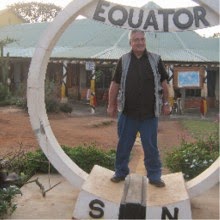
From the perspective of where I live most of the time, 1300m above sea-level beside Lake Victoria, exactly on the Equator, the predictions about what might happen in the tropics have been so woolly as to be meaningless. Our daily variation of temperature is from 15° to 35° so a couple of degrees more isn’t going to matter. Most of our rain is local; maybe it will cycle a bit faster. In fact, for ten months of the year it clouds up in the afternoon already since there is warming every day. In January, the lake appeared to be falling a little after a couple of months of drought, but now in April, there are floods all over the region.
For people who live in the tropics the wider pattern is always one of change, not far off the seven lean and seven fat years of Biblical repute. In the seventies the desert was going to march so far south that everyone would be living in the Sahara, surrounded by goats eating up the last plants.
In the late nineties, we had so much rain that I could hardly recognise some places that had been bone-dry. Interestingly no one talked about the retreat of the desert; that might be too optimistic, not doom-laden enough.
So, let’s have a bit of this global warming, accept it and enjoy it. The British holidaymaker may be able before long to get his timeshare cottage in Lerwick so he can spend some of the summer on the balmy beaches of Shetland, eating local mangoes and swatting the mosquitoes.
Barry Sesnan, Entebbe 2006
1533 words
A few millennia ago a substantial (or small and very fertile) proportion of the human race in the Northern hemisphere made a serious mistake and moved north. Some went the whole hog and lived in igloos, hunted seals, followed reindeer around and wore fur clothes; others just went part of the way and just shivered most of the time, consuming a huge amount of resources to keep warm, farming and storing food and forgetting.
These latter have, in recent centuries, developed quite complex explanations and justifications for their bizarre decision to leave sunny climes and move north or to the centre of cold continents, especially after, with the rise of nation-states, they got trapped within the boundaries of one country or another.
These explainers fall into two types.
In the first group are those who say: It wasn’t our fault, we were driven to it; the ice ages caught us unawares, we didn’t realise that winter would come every year.
Others, in a curious inversion of logic are proud of the hardship and, in the good tradition of cold showers and running out the sauna into the frozen lake, say: It was good for us. We needed the hardship to become great, to learn how to plan, to rule the world, to create tropical empires.
Many of these people, truth to tell, are now edging their way south again. The population centre of Britain drifts further and further south; Britons are overflowing into Northern France. The population centres of Norway, Finland, Canada and Sweden are just about as far south as they can go already, and could be argued to be actually somewhere near the Mediterranean for a good part of the year..
There is timeshare on the seasons. Northern denizens from St Petersburg to Glasgow jet off south for longer and longer periods of the year. Some do it in summer, many in winter. An invading force attacking Scandinavia or the Netherlands in August would probably find no one in. That may soon be true in winter too.
In the tradition of the stubbornness of human nature there is, of course, a contrary movement. The Sicilians, West Africans, Sri Lankans and the Jamaicans do move north, to freezing countries which offer larger salaries, suffering hardship on the way and rejection on arrival, while their unwilling hosts are actually packing to fly off to, you guessed it, The Gambia, Sri Lanka and the Caribbean.
But even the illegal immigrants would stop in Italy if they could. On the whole people prefer being warm to being cold, and it’s certainly a lot cheaper to be warm.
It is very curious therefore that so many people get exercised about global warming. After all, it will make Scotland, Canada and much of Russia warmer and whole areas of Canada and Siberia will be more cultivable than they are now.
Having been brought up in a freezing apartment in Edinburgh, I rejoice in the idea of more warm days and a shorter winter. I am looking forward to the effects of global warming.
I am not a global warming denier, though it seems to have become almost as wicked as to practice Holocaust denial. I am a global-warming accepter. I think that there are many benefits to be had from global warming. I am a believer in the ingenuity of the human race in the face of change. I do not believe in focussing only on the negative effects of global warming.
My heroes are the Dutch who make their country bigger by holding back – and pushing back – the sea; the American Pilgrims who after a rather slow start embraced the newness of their environment and learned how to live with it and develop it; the ‘Bushmen’ who find water in deserts; the Jesuits in Peru who developed quinine, the health pioneers of Victorian England who found out where cholera was coming from, and decided to do something about it.
They are the people who look at Mars and say: We can terraform that. They will look at the global warming changes and do something about them, rather than just rolling over, moaning and dying complaining about the mosquitoes.
We are told that an insect here or a plant there may die out. Well, tough, that’s life if it really happens, and anyway we are told already that species are dying like flies. But, surprise, surprise, like suggested in a recent article on coral, it often isn’t happening.
Lo and behold, the coral has not heard the pundits and is adapting in many places (though quite why this is a surprise is unclear since we were taught at school that coral, by definition, is a creature ‘on the edge’).
We are told that Bangladesh or the Maldives may disappear. The recent tsunami illustrates this, we are told, but we have to hold our horses a little. Firstly, the tsunami was not a climate event and secondly, most places did actually survive, including the Maldives. That people died was due to the suddenness of the event. There is no reason to believe that an event taking decades would have such a pernicious effect. After all, along the coast of Sri Lanka and Thailand the momentary rise in sea-level didn’t go more than a couple of hundred metres inland. This would be the case over most of the world’s coast-line.
When Mount Nyiragongo erupted in the early morning in Goma there was enough warning of the lava flow so there were almost no deaths when it reached the town in the afternoon. With their previous experience of natural and human disasters, the population walked quietly out with their most valuable possessions and returned the next day to find out what was left and start rebuilding. At the time the lady in charge of American aid declared that no help would be given by the Americans until Goma, a city of half a million, was moved out of danger! Though, to where, given that the volcano was to the north, the lake to the south, Rwanda to the east, and previously fractured land to the west, was not very clear.
Needless to say, Goma is still there under the still-smoking volcano, and Los Angeles is still on the San Andreas fault, Fuji overlooks Tokyo , and Bangladesh floods every year already but still functions as a country. In all these places people are aware of what might happen, but are unwilling, or unable to leave, for a mixture of straightforward and complex motives.
The one thing that is sure about global warming is that the effects will be complex. There may be more cloud cover which may mitigate the effects … or intensify them … depending on what you read. There will be more ‘weather’ in terms of higher wind-speeds, more storms, … or there won’t, since much weather is actually quite local.
There will be more mosquitoes further north (or south); but there may be more flowers, and more honey. Some crops will not do so well in some areas, others will do better; the Mediterranean diet will become easier to obtain locally in Britain. Lesser-known crops, long forgotten, may thrive.
Just look at some of the benefits of a warmer world by looking at fuel supply. Far less fuel will be used for heating; the transport of fuel around the world will be reduced and some oil-rich, politically unstable areas will come to have less political clout. There will be less need to travel to hot climates for recreation. Hot places will be nearer.
From the perspective of where I live most of the time, 1300m above sea-level beside Lake Victoria, exactly on the Equator, the predictions about what might happen in the tropics have been so woolly as to be meaningless. Our daily variation of temperature is from 15° to 35° so a couple of degrees more isn’t going to matter. Most of our rain is local; maybe it will cycle a bit faster. In fact, for ten months of the year it clouds up in the afternoon already since there is warming every day. In January, the lake appeared to be falling a little after a couple of months of drought, but now in April, there are floods all over the region.
For people who live in the tropics the wider pattern is always one of change, not far off the seven lean and seven fat years of Biblical repute. In the seventies the desert was going to march so far south that everyone would be living in the Sahara, surrounded by goats eating up the last plants.
In the late nineties, we had so much rain that I could hardly recognise some places that had been bone-dry. Interestingly no one talked about the retreat of the desert; that might be too optimistic, not doom-laden enough.
So, let’s have a bit of this global warming, accept it and enjoy it. The British holidaymaker may be able before long to get his timeshare cottage in Lerwick so he can spend some of the summer on the balmy beaches of Shetland, eating local mangoes and swatting the mosquitoes.
Barry Sesnan, Entebbe 2006
1533 words
The tyranny of hotels
I have just spent a couple of days in a hotel outside Kampala, said to be one of the best in its town.
The stay set me off again thinking about hotels I have known, and wondering why it seems so difficult for hotels to ‘get it right’. I am not talking about short-time lodgings which can manage with a 40 watt bulb because the guests have not come to look at the furniture, but hotels that may host consultants, staff who are coming to seminars or visit field offices and have to work, or tourists who want a comfortable rest after travelling. It should not matter whether they are Ugandans or foreigners.
Here are some thoughts based on recent experience.
Light
Why should a hotel provide rooms that look directly onto a blank wall? I have just experienced that. The room was so dark that when the power was off during the day, I needed a torch in the room. Of course no candle or alternative light was provided, and the hotel kept its generator off as long as there was the tiniest bit of daylight outside, even if it did not penetrate the rooms.
Food
Why in a country full of fruit is it usually a really hard job to get a hotel serve a decent amount of fruit with breakfast, or with any other meal for that matter? The world is moving to healthier eating, but not in our hotels it seems.
While thinking of food, why are the menus so limited in practice. You ask the waiter or waitress what actually exists, rather than bother to read the menu. Very few things are available and if that includes fresh vegetables you are very lucky.
It’s a real problem at breakfast. I happen to like soft-fried eggs (with the yolk runny), but it usually requires two days to train the kitchen to do them without doing violence to the eggs to make the universal omelette.
Or you have to discover the code word. Recently it was ‘semi-fried’. In Kenya they are called ‘macho ya ngombe’. But the mystery is why a hotel doesn’t know about them already? It is the commonest way to provide breakfast eggs in many countries.
Sockets
Is there anyone these days who stays in a hotel who does not have a mobile phone that will need to be charged?
In the last room I stayed in (the one with the wall blocking the window) there was only one socket which had to do for laptop (plenty of people have them also nowadays), fan and television.
As it happened the television did not work anyway because in building the wall the cable had been cut. No one bothered to mention that when I checked in, by the way.
Anyway the socket was on the opposite side of the room from the fan and TV and their cables were too short to reach it. After a day of requesting and waiting an extension cord was provided. But this was a fairly new hotel. Why couldn’t it have at least two sockets, even more.
Size
The builders of some hotels seem to have no idea of planning or measuring or even how big a human being is. In one room the wardrobe wouldn’t open fully because there was no space for it to do so. The room was just slightly longer than the bed. In other rooms in the same hotel that cost less, the room was also so narrow that there was no room for a table. But I must say those rooms did have a view, which would compensate for not having a television.
In another the toilet was so placed next to the wall that even a smallish person would not be able to sit there without discomfort. For us larger people it was a punishment. Just to make it worse the toilet-paper holder was well out of reach.
Oh, and then we have to remember the lodgings that provide no hook or hanger for clothes, including one hugely expensive hotel which I stayed in - in Juba, Southern Sudan.
Consultant’s ideal
Some people actually have to work when they come to a hotel. A sizeable table at working height, an upright chair, sockets as mentioned before, a table light.
Guest as victim
In Uganda if you visit someone you put yourself in your host’s hands. The host even has to give ‘permission’ for you to leave. Some hotels go further than that and treat the visitor as their prisoner or victim.
From the staff who hang around the lounge shutting the bar and waiting for you to go to bed so they can lock up, to the hotel in Mbarara which was unable to provide breakfast before 8 a.m. because that is when the manager came in and he had the keys to the fridge.
So if you have to leave early or start work early, then there is no breakfast for you (though you have probably paid for it).
There was a hotel in the west where they did not switch the water on in the morning though the majority of its guests wanted to get to Queen Elisabeth park in the early morning; another that switched the water-heater off early in the evening.
Running on the cheap
Some of it is just running the hotel on a shoe-string.
Hotels that have only one set of towels, so when you go out they wash them and you need to wait until the evening if you need a towel.
Hotels that won’t employ qualified staff or provide their staff with training.
Hotels that think a 100 watt bulb is a waste of money or that a tiny piece of soap the size of a matchbox will do for 24 hours.
The hotel in Rwanda where the TVs in all the bedrooms show only the programme that the people in the lounge want to watch.
Lack of communication
Many guests don’t bother to express their desire for improvement, perhaps because they know it gets nowhere.
The problem is made worse by the serious lack of communication between the junior staff and the management. Most junior staff I have talked to are frightened of telling the management what the guests are complaining about, and they seem to have no book for recording complaints. Everything is ‘solved’ ad hoc’.
Anyway, the manager is rarely in the hotel. If a manager comes in he or she seems unable to try to experience his hotel from the point of view of the victim, sorry prisoner, sorry guest.
In one hotel recently almost every visitor tripped on the staircase. Why? Because the steps were all of different heights. Why was such a staircase accepted from the builders? Was I the only one who noticed the problem, even though one visitor fell quite badly?
In another, breakfast was seriously late every morning because not enough food was released at once to the cooks. The manager, when we managed to track him down, seemed to regard us as the nuisance and then started blaming the waiters and the cooks.
Ugandans are too tolerant!
I have just spent a couple of days in a hotel outside Kampala, said to be one of the best in its town.
The stay set me off again thinking about hotels I have known, and wondering why it seems so difficult for hotels to ‘get it right’. I am not talking about short-time lodgings which can manage with a 40 watt bulb because the guests have not come to look at the furniture, but hotels that may host consultants, staff who are coming to seminars or visit field offices and have to work, or tourists who want a comfortable rest after travelling. It should not matter whether they are Ugandans or foreigners.
Here are some thoughts based on recent experience.
Light
Why should a hotel provide rooms that look directly onto a blank wall? I have just experienced that. The room was so dark that when the power was off during the day, I needed a torch in the room. Of course no candle or alternative light was provided, and the hotel kept its generator off as long as there was the tiniest bit of daylight outside, even if it did not penetrate the rooms.
Food
Why in a country full of fruit is it usually a really hard job to get a hotel serve a decent amount of fruit with breakfast, or with any other meal for that matter? The world is moving to healthier eating, but not in our hotels it seems.
While thinking of food, why are the menus so limited in practice. You ask the waiter or waitress what actually exists, rather than bother to read the menu. Very few things are available and if that includes fresh vegetables you are very lucky.
It’s a real problem at breakfast. I happen to like soft-fried eggs (with the yolk runny), but it usually requires two days to train the kitchen to do them without doing violence to the eggs to make the universal omelette.
Or you have to discover the code word. Recently it was ‘semi-fried’. In Kenya they are called ‘macho ya ngombe’. But the mystery is why a hotel doesn’t know about them already? It is the commonest way to provide breakfast eggs in many countries.
Sockets
Is there anyone these days who stays in a hotel who does not have a mobile phone that will need to be charged?
In the last room I stayed in (the one with the wall blocking the window) there was only one socket which had to do for laptop (plenty of people have them also nowadays), fan and television.
As it happened the television did not work anyway because in building the wall the cable had been cut. No one bothered to mention that when I checked in, by the way.
Anyway the socket was on the opposite side of the room from the fan and TV and their cables were too short to reach it. After a day of requesting and waiting an extension cord was provided. But this was a fairly new hotel. Why couldn’t it have at least two sockets, even more.
Size
The builders of some hotels seem to have no idea of planning or measuring or even how big a human being is. In one room the wardrobe wouldn’t open fully because there was no space for it to do so. The room was just slightly longer than the bed. In other rooms in the same hotel that cost less, the room was also so narrow that there was no room for a table. But I must say those rooms did have a view, which would compensate for not having a television.
In another the toilet was so placed next to the wall that even a smallish person would not be able to sit there without discomfort. For us larger people it was a punishment. Just to make it worse the toilet-paper holder was well out of reach.
Oh, and then we have to remember the lodgings that provide no hook or hanger for clothes, including one hugely expensive hotel which I stayed in - in Juba, Southern Sudan.
Consultant’s ideal
Some people actually have to work when they come to a hotel. A sizeable table at working height, an upright chair, sockets as mentioned before, a table light.
Guest as victim
In Uganda if you visit someone you put yourself in your host’s hands. The host even has to give ‘permission’ for you to leave. Some hotels go further than that and treat the visitor as their prisoner or victim.
From the staff who hang around the lounge shutting the bar and waiting for you to go to bed so they can lock up, to the hotel in Mbarara which was unable to provide breakfast before 8 a.m. because that is when the manager came in and he had the keys to the fridge.
So if you have to leave early or start work early, then there is no breakfast for you (though you have probably paid for it).
There was a hotel in the west where they did not switch the water on in the morning though the majority of its guests wanted to get to Queen Elisabeth park in the early morning; another that switched the water-heater off early in the evening.
Running on the cheap
Some of it is just running the hotel on a shoe-string.
Hotels that have only one set of towels, so when you go out they wash them and you need to wait until the evening if you need a towel.
Hotels that won’t employ qualified staff or provide their staff with training.
Hotels that think a 100 watt bulb is a waste of money or that a tiny piece of soap the size of a matchbox will do for 24 hours.
The hotel in Rwanda where the TVs in all the bedrooms show only the programme that the people in the lounge want to watch.
Lack of communication
Many guests don’t bother to express their desire for improvement, perhaps because they know it gets nowhere.
The problem is made worse by the serious lack of communication between the junior staff and the management. Most junior staff I have talked to are frightened of telling the management what the guests are complaining about, and they seem to have no book for recording complaints. Everything is ‘solved’ ad hoc’.
Anyway, the manager is rarely in the hotel. If a manager comes in he or she seems unable to try to experience his hotel from the point of view of the victim, sorry prisoner, sorry guest.
In one hotel recently almost every visitor tripped on the staircase. Why? Because the steps were all of different heights. Why was such a staircase accepted from the builders? Was I the only one who noticed the problem, even though one visitor fell quite badly?
In another, breakfast was seriously late every morning because not enough food was released at once to the cooks. The manager, when we managed to track him down, seemed to regard us as the nuisance and then started blaming the waiters and the cooks.
Ugandans are too tolerant!
In August I went to do some training for an NGO in another country. I found that ‘Giving participants enough to eat spoils them’ (and letting them have any idea about when they might be fed is a state secret. Suddenly in the middle of a training session everyone is summoned out to eat Breakfast? Lunch? Dinner? ).
‘Letting people know anything about their training programme in advance is a sign of weakness.’ This includes the extremely weird idea of informing them in time about anything at all. He actually boasted about how they had all been summoned at the last minute (from all over a huge district with no roads or public transport) to attend a training without being told why they were being called or how long for.
‘It is subversive to think that the trainers might need to duplicate anything, use a visual aid etc’ (There was no generator, thus no power either in the office, the guest house or in the venue). In the guest house, the fridge hadn’t worked since I was last there in May.
The slightest attempt to help is a threat to the guy. So before going I got the HQ to agree, on the basis of previous dreadful time-keeping, to renting a second car for my week (and the other 4 facilitators). He refused to do it saying there was no need, but mainly because he felt criticised by the request. So huge amounts of time were wasted.
‘Letting people know anything about their training programme in advance is a sign of weakness.’ This includes the extremely weird idea of informing them in time about anything at all. He actually boasted about how they had all been summoned at the last minute (from all over a huge district with no roads or public transport) to attend a training without being told why they were being called or how long for.
‘It is subversive to think that the trainers might need to duplicate anything, use a visual aid etc’ (There was no generator, thus no power either in the office, the guest house or in the venue). In the guest house, the fridge hadn’t worked since I was last there in May.
The slightest attempt to help is a threat to the guy. So before going I got the HQ to agree, on the basis of previous dreadful time-keeping, to renting a second car for my week (and the other 4 facilitators). He refused to do it saying there was no need, but mainly because he felt criticised by the request. So huge amounts of time were wasted.
Tuesday, May 23, 2006
“The bridge is down” “Yes”, I said, “I have to take a boat along the lakeshore to get back onto the main road. It’s been organised by OCHA.”
Blank incomprehension from my friend. “Boat? In Morobo?. The bridge is down just near the Uganda border”. There isn’t a lake anywhere near there.
“Aha”, I said, “I’m not talking about South Sudan this time; this bridge is on the road to Baraka in Congo. And the boat runs along the shores of Lake Tanganyika bypassing the area where the road is cut”.
The rain is falling incessantly in both the places where I am working now, Southern Sudan and South Kivu in Congo. Two months ago everyone was wringing their hands over the drought. As always the variation in weather in Africa over two months is far larger that any change global warming will throw our way. I already live in places where the temperature never falls below 25° and often goes up to 40°. We’re used to it.
It’s pouring down all over Uganda as well. Lake Victoria is said to have risen a foot in a month (though this figure, which would seem to be quite easy to measure, is just as disputed as the contention that - unnoticed by thousands of fishermen and millions of citizens around the lake - it fell 3 metres over the last few years, severely reducing the electricity supply throughout the region).
This time we had agreed that I would be picked up at the Congo-Burundi border as War Child’s car couldn’t reach Uvira or Bujumbura because of the broken bridge. This meant that I crossed the border on foot and not by car. Once again, I thought that it should be compulsory for all expatriates and senior politicians to cross borders on foot, or take a road journey to know what is really going on. When I crossed by NGO car, no one checked my bags or gave me any trouble. When I crossed on foot, the Congo customs opened all my bags, despite the fact there was nothing you could carry into Congo that could do more harm than what is already happening in the country.
I was also asked for my Yellow Vaccination Card, a requirement abolished in most countries of the world. Again, what possible disease could I be bringing into Congo that did not already exist here?
The yellow card is the cause of a lot of problems for ordinary African travellers who find themselves being asked for it by ordinary policemen in the middle of nowhere, who will demand a bribe if you don’t have it. Of course, the principal result of this lack of control is that everyone, fearing getting AIDS from an injection, just buys a ready completed yellow card (conveniently available just behind the vaccination office under that mango tree over there).
So, it’s similar to getting your passport in Mogadishu where, at the collapse of the government 15 years ago, one man fled with the passport books but another fled with the Ministry’s embossing stamp. Both have set up shop in the market, and you need to see both to get your passport. Again just as with the yellow card it is remarkably quick and convenient. It rarely takes more than an hour, unless youinsist on an already used one (it has more credibility).
Unfortunately these days not many countries accept Somali passports and they will have probably have problems when biometric passports come in.
OK I was stopped at customs, but I was brought to the head of the queue, thus giving everyone a chance to see what I had in my luggage. Once, crossing into SPLA controlled territory with a Kenyan Indian researcher, we were stopped by two very young-looking soldiers in flip-flops who demanded to see inside Dr Anisa’s luggage. They pulled out her bras and panties one by one, handled them, held them up to the sun. Obviously never having seen anything like them in their years in the bush war. Meanwhile, they ignored all the things like the video equipment which we thought they would have concentrated on.
====
I am now finally in Baraka after flying to Bujumbura, taking a taxi to the border, travelling with Ciceron and Alimasi – as pillion passengers - in a convoy of ‘boda-boda’ motor bikes into Uvira, then on a rubber Zodiac boat to Kigongo where Ben picked us up in the War Child pick-up. A train would have complemented the trip but the railway that existed in colonial times has long disappeared. There are just a few rails to mark its existence.
The middle of Africa, up and down the western Rift Valley where if you spill a glass of water, or piss for that matter, on the top of the escarpment, part of the liquid will flow to the Congo and thence to the Atlantic and the rest into the Mediterranean, courtesy of the Nile.
This watershed is interrupted by volcanoes and takes some crazy turns on the map caused by very recent rises and falls of the landscape, including volcanic eruptions. The result is that the Great Lakes also drain in unexpected ways. Lake Kivu ends up in the Congo passing through Lake Tanganyika on the way. Lake Victoria and Lake Albert end up in the Nile.
No wonder the explorers were confused about the source of the Nile, especially as the Nile adds a few extra kinks just to confuse. On my last flight from Juba to Entebbe we crossed the Nile six times on a straight trajectory north to south. In South Sudan the Nile’s present course is so recent that there is hardly any valley, just a small furrow in the landscape. Just a kilometre away from the Nile you can’t even detect its existence.
I work now in both Southern Sudan and eastern Congo (South Kivu). What there is in common is that both are areas recovering from wars. In Congo the war was more violent, and more rapid. In South Sudan, in their quiet, slow war, the main problem was isolation and a slowing down of the pace of life.
However, both were destructive in their own way. A figure much bandied around in Congo by agencies and politicians is that 3 million extra people died because of the wars in eastern Congo, some as a direct result of fighting, but most because of the collapse of medical services and of law and order. Politicians like to claim that the war killed 3 million people as they blame the ex-rebels who are now standing for political posts in the coming elections.
In Southern Sudan there were six million people in the census in the early eighties (including me). Most people believe that by the mid-nineties only 2 million remained in the south, 2 million had fled and 2 million died who shouldn’t have.
I have always said, never believe any figure ending in three zeroes, especially if it comes from a UN body or an NGO. It is usually plucked out of the sky.
So what about these figures ending in six zeroes? Well, certainly, it is impossible to verify them. I have a close knowledge of certain parts of the Southern Sudanese population, originating in Equatoria. I taught the parents and now know the children and I have to say that one third of them have certainly been in exile (probably more), another third are in a strange limbo, sometimes in, sometimes out (it is a border area) but I could not justify a claim that one third of them died. That would mean that of the six hundred students we had in our first year in Juba Day Secondary school, 200 had died. Even allowing for the normal death rate, and for specific cases I know about, such as one executed for some infraction when he became an SPLA officer, and the baby of one of my ex-clerks who died from his father’s drunken neglect, and a group of wild life officers executed by the Arabs in 1992 for suspected sympathy with the SPLA incursion into Juba (which left lasting resentment, as the SPLA didn’t follow through, so many were punished when they withdrew). I cannot say that I know that one third died.
In Congo, through knowledge of people I work with, the ‘extra deaths’ theory would seem to be more plausible. The mother of one of my trainers was the only one of nine Hema women captured by the Lendus one day who was not hacked to death. There are huge areas where there has been no modern medical care for years, even preceding the war. Still, three million ….
I do not think these ‘what if’ scenarios have much use.
Of course, statistics are bothersome even at the best of times. A couple of years ago UNICEF conducted a very detailed multi-indicator household survey in many parts of DR Congo. One of the questions was about the vaccinations children had received. Over the country the figure averaged out that about 40% of parents reported that their children had been vaccinated against polio (higher in the cities).
At exactly the same time, the joint WHO and UNICEF national polio vaccination campaign was reporting between 90 and 105% success (the latter figure in areas with more people than the baseline showed because of displacement by war)..
And then, what about the fact that most school attendance statistics in Africa do not include refugees? So, for Somalia and South Sudan where MOST of the children in some border areas are educated in another country the figures of school attendance are consistently under-reported. In Gedo Region in Somalia we counted the children in school and in the camps and main nearby towns in Kenya and concluded that UNICEF’s statistics were reporting only half the real school attendance figures.
Or the case of Congo where the primary age bracket is, at 6 – 14 a period of 8 years. But primary school is only six years long. So school attendance percentages are consistently wrong and under-reported by as much as a third.
After very different types of peace settlement, both areas where I work are destinations for refugees returning after years in exile. In both places the refugees had a better time in their camps and settlements than those who stayed and had to face rebels, bombings, starvation and deprivation. There is a difference though. In Congo, the country is rich, but even with peace, it is difficult to see how this wealth will get to the ordinary person, because it is being corruptly managed at the highest national and international levels.
In South Sudan, the peace deal allocated a lot of oil money to the South, which will probably reach some people in the form of salaries, but otherwise the country has no natural resources at all. As so often in areas which have money from only one resource which costs relatively little to produce (notably oil) other parts of the economy will be depressed
On a more domestic front, Echo and Bravo, my two dogs in Uganda have been joined by six puppies (16% of whom died by falling into the pit latrine). I hope most of them will have been taken over by those who claim to want them by next week. Otherwise I will be overwhelmed.
Blank incomprehension from my friend. “Boat? In Morobo?. The bridge is down just near the Uganda border”. There isn’t a lake anywhere near there.
“Aha”, I said, “I’m not talking about South Sudan this time; this bridge is on the road to Baraka in Congo. And the boat runs along the shores of Lake Tanganyika bypassing the area where the road is cut”.
The rain is falling incessantly in both the places where I am working now, Southern Sudan and South Kivu in Congo. Two months ago everyone was wringing their hands over the drought. As always the variation in weather in Africa over two months is far larger that any change global warming will throw our way. I already live in places where the temperature never falls below 25° and often goes up to 40°. We’re used to it.
It’s pouring down all over Uganda as well. Lake Victoria is said to have risen a foot in a month (though this figure, which would seem to be quite easy to measure, is just as disputed as the contention that - unnoticed by thousands of fishermen and millions of citizens around the lake - it fell 3 metres over the last few years, severely reducing the electricity supply throughout the region).
This time we had agreed that I would be picked up at the Congo-Burundi border as War Child’s car couldn’t reach Uvira or Bujumbura because of the broken bridge. This meant that I crossed the border on foot and not by car. Once again, I thought that it should be compulsory for all expatriates and senior politicians to cross borders on foot, or take a road journey to know what is really going on. When I crossed by NGO car, no one checked my bags or gave me any trouble. When I crossed on foot, the Congo customs opened all my bags, despite the fact there was nothing you could carry into Congo that could do more harm than what is already happening in the country.
I was also asked for my Yellow Vaccination Card, a requirement abolished in most countries of the world. Again, what possible disease could I be bringing into Congo that did not already exist here?
The yellow card is the cause of a lot of problems for ordinary African travellers who find themselves being asked for it by ordinary policemen in the middle of nowhere, who will demand a bribe if you don’t have it. Of course, the principal result of this lack of control is that everyone, fearing getting AIDS from an injection, just buys a ready completed yellow card (conveniently available just behind the vaccination office under that mango tree over there).
So, it’s similar to getting your passport in Mogadishu where, at the collapse of the government 15 years ago, one man fled with the passport books but another fled with the Ministry’s embossing stamp. Both have set up shop in the market, and you need to see both to get your passport. Again just as with the yellow card it is remarkably quick and convenient. It rarely takes more than an hour, unless youinsist on an already used one (it has more credibility).
Unfortunately these days not many countries accept Somali passports and they will have probably have problems when biometric passports come in.
OK I was stopped at customs, but I was brought to the head of the queue, thus giving everyone a chance to see what I had in my luggage. Once, crossing into SPLA controlled territory with a Kenyan Indian researcher, we were stopped by two very young-looking soldiers in flip-flops who demanded to see inside Dr Anisa’s luggage. They pulled out her bras and panties one by one, handled them, held them up to the sun. Obviously never having seen anything like them in their years in the bush war. Meanwhile, they ignored all the things like the video equipment which we thought they would have concentrated on.
====
I am now finally in Baraka after flying to Bujumbura, taking a taxi to the border, travelling with Ciceron and Alimasi – as pillion passengers - in a convoy of ‘boda-boda’ motor bikes into Uvira, then on a rubber Zodiac boat to Kigongo where Ben picked us up in the War Child pick-up. A train would have complemented the trip but the railway that existed in colonial times has long disappeared. There are just a few rails to mark its existence.
The middle of Africa, up and down the western Rift Valley where if you spill a glass of water, or piss for that matter, on the top of the escarpment, part of the liquid will flow to the Congo and thence to the Atlantic and the rest into the Mediterranean, courtesy of the Nile.
This watershed is interrupted by volcanoes and takes some crazy turns on the map caused by very recent rises and falls of the landscape, including volcanic eruptions. The result is that the Great Lakes also drain in unexpected ways. Lake Kivu ends up in the Congo passing through Lake Tanganyika on the way. Lake Victoria and Lake Albert end up in the Nile.
No wonder the explorers were confused about the source of the Nile, especially as the Nile adds a few extra kinks just to confuse. On my last flight from Juba to Entebbe we crossed the Nile six times on a straight trajectory north to south. In South Sudan the Nile’s present course is so recent that there is hardly any valley, just a small furrow in the landscape. Just a kilometre away from the Nile you can’t even detect its existence.
I work now in both Southern Sudan and eastern Congo (South Kivu). What there is in common is that both are areas recovering from wars. In Congo the war was more violent, and more rapid. In South Sudan, in their quiet, slow war, the main problem was isolation and a slowing down of the pace of life.
However, both were destructive in their own way. A figure much bandied around in Congo by agencies and politicians is that 3 million extra people died because of the wars in eastern Congo, some as a direct result of fighting, but most because of the collapse of medical services and of law and order. Politicians like to claim that the war killed 3 million people as they blame the ex-rebels who are now standing for political posts in the coming elections.
In Southern Sudan there were six million people in the census in the early eighties (including me). Most people believe that by the mid-nineties only 2 million remained in the south, 2 million had fled and 2 million died who shouldn’t have.
I have always said, never believe any figure ending in three zeroes, especially if it comes from a UN body or an NGO. It is usually plucked out of the sky.
So what about these figures ending in six zeroes? Well, certainly, it is impossible to verify them. I have a close knowledge of certain parts of the Southern Sudanese population, originating in Equatoria. I taught the parents and now know the children and I have to say that one third of them have certainly been in exile (probably more), another third are in a strange limbo, sometimes in, sometimes out (it is a border area) but I could not justify a claim that one third of them died. That would mean that of the six hundred students we had in our first year in Juba Day Secondary school, 200 had died. Even allowing for the normal death rate, and for specific cases I know about, such as one executed for some infraction when he became an SPLA officer, and the baby of one of my ex-clerks who died from his father’s drunken neglect, and a group of wild life officers executed by the Arabs in 1992 for suspected sympathy with the SPLA incursion into Juba (which left lasting resentment, as the SPLA didn’t follow through, so many were punished when they withdrew). I cannot say that I know that one third died.
In Congo, through knowledge of people I work with, the ‘extra deaths’ theory would seem to be more plausible. The mother of one of my trainers was the only one of nine Hema women captured by the Lendus one day who was not hacked to death. There are huge areas where there has been no modern medical care for years, even preceding the war. Still, three million ….
I do not think these ‘what if’ scenarios have much use.
Of course, statistics are bothersome even at the best of times. A couple of years ago UNICEF conducted a very detailed multi-indicator household survey in many parts of DR Congo. One of the questions was about the vaccinations children had received. Over the country the figure averaged out that about 40% of parents reported that their children had been vaccinated against polio (higher in the cities).
At exactly the same time, the joint WHO and UNICEF national polio vaccination campaign was reporting between 90 and 105% success (the latter figure in areas with more people than the baseline showed because of displacement by war)..
And then, what about the fact that most school attendance statistics in Africa do not include refugees? So, for Somalia and South Sudan where MOST of the children in some border areas are educated in another country the figures of school attendance are consistently under-reported. In Gedo Region in Somalia we counted the children in school and in the camps and main nearby towns in Kenya and concluded that UNICEF’s statistics were reporting only half the real school attendance figures.
Or the case of Congo where the primary age bracket is, at 6 – 14 a period of 8 years. But primary school is only six years long. So school attendance percentages are consistently wrong and under-reported by as much as a third.
After very different types of peace settlement, both areas where I work are destinations for refugees returning after years in exile. In both places the refugees had a better time in their camps and settlements than those who stayed and had to face rebels, bombings, starvation and deprivation. There is a difference though. In Congo, the country is rich, but even with peace, it is difficult to see how this wealth will get to the ordinary person, because it is being corruptly managed at the highest national and international levels.
In South Sudan, the peace deal allocated a lot of oil money to the South, which will probably reach some people in the form of salaries, but otherwise the country has no natural resources at all. As so often in areas which have money from only one resource which costs relatively little to produce (notably oil) other parts of the economy will be depressed
On a more domestic front, Echo and Bravo, my two dogs in Uganda have been joined by six puppies (16% of whom died by falling into the pit latrine). I hope most of them will have been taken over by those who claim to want them by next week. Otherwise I will be overwhelmed.
Wednesday, March 08, 2006
Green and aware in Somalia. Letter from Baledogle
A reminiscence from my first visit to Somalia
December in Somalia can be unexpectedly green, at least inland from Mogadishu along the 100 km tarmac road to Baledogle. There are crops growing, there is grass and, beside the road, water lies in the hollows made, possibly deliberately, by the road builders years ago. Only the road-blocks armed by the young men, the one burning village ('just local clan fighting’) and the shattered town of Afgoy remind you of the violent past on a journey to or from the airport, one of three used by international agencies.
It was in December that we went early to the airport to catch our flight to our next destination. Gentle reader, you are invited to compare my pre flight experiences with yours in other places and consider how, even in Somalia, there is an awareness of some of the issues which concern us all, namely safety on the roads, consumer power in face of poor quality goods and last but not least, the preservation of the environment.
We left Mogadishu in two vehicles: one carrying the passengers, hired by the organisation we worked for, the other carrying four young men with guns, hired by the owner of the first vehicle, to protect our vehicle. We shall see the value of these young men later in this story. We drove at a fairly fast rate through the outskirts of Mog (as it is affectionately called by expatriates) diverted through Afgoy town because an endless camel train was crossing the bridge and I for one was delighted to recognise there the solidarity of people in the shape of the Bosnia Tea Room which has, appropriately perhaps, one wall blown off.
After Afgoy we returned to a speed with which the driver was comfortable and rocketed off towards the airport gaining energy from the frequent need to accelerate towards the armed youth at the road blocks, who were, it seemed, all capable of divining that we belonged to that category of vehicle which did not have to stop. This divining was done in the split second between our being spotted overtaking a lorry slowly approaching their barrier and the moment one of the youths was galvanised to raise the pole for us. Given that our vehicle looked like all the others and that we were coming out of the rising sun this was a remarkable experience. So we gained speed, we overtook everything in sight, even if the road was occupied by a lorry or a flock of sheep coming towards us, followed faithfully by our gun-persons, who all happened to be male, though there was no objective evidence that females have been excluded from this particular career opportunity.
Our driver, though, was aware of the responsibility, of his position and, as we approached a slight curve in the road, not, to my eyes, any worse than many we had previously taken with no reduction of speed, he turned and informed us all that; it was very important to slow down at bends. He may, possibly, have eased off on the accelerator a little though, since, he was not looking at the road at all, as he reminded us of this important part of highway code, I was not quite sure.
Baledogle Airport is one of the three airports serving Mogadishu. Like much of Somalia, Baledogle, a former military airport, does not have a single intact building, having pounded by force or another before, during and after the civil war. It is also littered with shattered and twisted vehicles and occupied and patrolled by a number of young men with guns.
We were aware that the chance of airport catering being available was fairy low so we stopped at the last village to buy canned drinks and doughnut without the whole like cakes known throughout East Africa as mandazi. When we had arrived 1 had thought hard about the canned drinks (imported from the Gulf), being worried about suitable and ecologically sound disposal of the can, but a quick glance around the airport premises convinced me that there was enough unrecycled material in the way of downed planes, dead tanks, other vehicles and bits of buildings to ensure that the can would for now not be noticed and that it would be recycled when the great clean up eventually started. In fact there had been enough waste of material (not to consider lives for the moment) at Baledogle alone to wipe out any of the gains made by recycling projects in half of Europe. As it turned out the can was swiped by a small boy almost before it hit the ground. He would probably turn it into a beautifully-made model Mig, to be sold in Mog to expatriates interested in traditional crafts.
At the airport there was a hitch. The militia who controlled the entrance would not let us is in. Apparently they had not been paid and it was their intention, we were informed, to shoot down the first plane that tried to land if their grievances were not settled. Since the first plane was likely to be the one coming for us this was not a little worrying and held, perhaps, more significance than the usual airport delay since we had no way, until the plane was much nearer, of telling the pilot of the 'reasons beyond our control' which would oblige him to return to Nairobi. So we sat at a tea shelter intending to wait for the plane to come into radio distance.
We shared our drinks (not too long expired') and started on the mandazis. They were unprepossessing in appearance and foul in taste and the consensus among those who knew was that they had been contaminated by aviation fuel (the cooking fuel of choice for anyone living near the airport). This abuse of the travelling consumer exercised our gun-people greatly and it was only when the thud of anti aircraft fire started that we remembered why we were there.
Think of the range of sounds at a busy airport, such as Heathrow. You can hardly hear the planes for the zing of cash-registers, the soft-tones of advertising and the ker clunk of the specialised three wheels working trolleys employed. The sound of an anti aircraft gun is not usually what one hears. What a rare privilege therefore to hear to hear this and directed, possibly, at ones own plane.
I got back to my office in Mandera one day to find my colleague Roger who worked for UNICEF telling me about an incident in the small town he had just come from in Somalia. After an altercation over allocation of project funds to one sub-clan or another, shots had been fired and, Roger said, some were meant for me. A faction had thought Roger was me and shot at him. Luckily I wasn’t there to be shot at.
Violence exists in Africa and it has certainly got worse over the years. It is not just a perception. In my first years, I rarely heard of a murder or of a robbery with guns. Just last month two of my colleagues in Goma were attacked by seven armed men in their house.
A reminiscence from my first visit to Somalia
December in Somalia can be unexpectedly green, at least inland from Mogadishu along the 100 km tarmac road to Baledogle. There are crops growing, there is grass and, beside the road, water lies in the hollows made, possibly deliberately, by the road builders years ago. Only the road-blocks armed by the young men, the one burning village ('just local clan fighting’) and the shattered town of Afgoy remind you of the violent past on a journey to or from the airport, one of three used by international agencies.
It was in December that we went early to the airport to catch our flight to our next destination. Gentle reader, you are invited to compare my pre flight experiences with yours in other places and consider how, even in Somalia, there is an awareness of some of the issues which concern us all, namely safety on the roads, consumer power in face of poor quality goods and last but not least, the preservation of the environment.
We left Mogadishu in two vehicles: one carrying the passengers, hired by the organisation we worked for, the other carrying four young men with guns, hired by the owner of the first vehicle, to protect our vehicle. We shall see the value of these young men later in this story. We drove at a fairly fast rate through the outskirts of Mog (as it is affectionately called by expatriates) diverted through Afgoy town because an endless camel train was crossing the bridge and I for one was delighted to recognise there the solidarity of people in the shape of the Bosnia Tea Room which has, appropriately perhaps, one wall blown off.
After Afgoy we returned to a speed with which the driver was comfortable and rocketed off towards the airport gaining energy from the frequent need to accelerate towards the armed youth at the road blocks, who were, it seemed, all capable of divining that we belonged to that category of vehicle which did not have to stop. This divining was done in the split second between our being spotted overtaking a lorry slowly approaching their barrier and the moment one of the youths was galvanised to raise the pole for us. Given that our vehicle looked like all the others and that we were coming out of the rising sun this was a remarkable experience. So we gained speed, we overtook everything in sight, even if the road was occupied by a lorry or a flock of sheep coming towards us, followed faithfully by our gun-persons, who all happened to be male, though there was no objective evidence that females have been excluded from this particular career opportunity.
Our driver, though, was aware of the responsibility, of his position and, as we approached a slight curve in the road, not, to my eyes, any worse than many we had previously taken with no reduction of speed, he turned and informed us all that; it was very important to slow down at bends. He may, possibly, have eased off on the accelerator a little though, since, he was not looking at the road at all, as he reminded us of this important part of highway code, I was not quite sure.
Baledogle Airport is one of the three airports serving Mogadishu. Like much of Somalia, Baledogle, a former military airport, does not have a single intact building, having pounded by force or another before, during and after the civil war. It is also littered with shattered and twisted vehicles and occupied and patrolled by a number of young men with guns.
We were aware that the chance of airport catering being available was fairy low so we stopped at the last village to buy canned drinks and doughnut without the whole like cakes known throughout East Africa as mandazi. When we had arrived 1 had thought hard about the canned drinks (imported from the Gulf), being worried about suitable and ecologically sound disposal of the can, but a quick glance around the airport premises convinced me that there was enough unrecycled material in the way of downed planes, dead tanks, other vehicles and bits of buildings to ensure that the can would for now not be noticed and that it would be recycled when the great clean up eventually started. In fact there had been enough waste of material (not to consider lives for the moment) at Baledogle alone to wipe out any of the gains made by recycling projects in half of Europe. As it turned out the can was swiped by a small boy almost before it hit the ground. He would probably turn it into a beautifully-made model Mig, to be sold in Mog to expatriates interested in traditional crafts.
At the airport there was a hitch. The militia who controlled the entrance would not let us is in. Apparently they had not been paid and it was their intention, we were informed, to shoot down the first plane that tried to land if their grievances were not settled. Since the first plane was likely to be the one coming for us this was not a little worrying and held, perhaps, more significance than the usual airport delay since we had no way, until the plane was much nearer, of telling the pilot of the 'reasons beyond our control' which would oblige him to return to Nairobi. So we sat at a tea shelter intending to wait for the plane to come into radio distance.
We shared our drinks (not too long expired') and started on the mandazis. They were unprepossessing in appearance and foul in taste and the consensus among those who knew was that they had been contaminated by aviation fuel (the cooking fuel of choice for anyone living near the airport). This abuse of the travelling consumer exercised our gun-people greatly and it was only when the thud of anti aircraft fire started that we remembered why we were there.
Think of the range of sounds at a busy airport, such as Heathrow. You can hardly hear the planes for the zing of cash-registers, the soft-tones of advertising and the ker clunk of the specialised three wheels working trolleys employed. The sound of an anti aircraft gun is not usually what one hears. What a rare privilege therefore to hear to hear this and directed, possibly, at ones own plane.
I got back to my office in Mandera one day to find my colleague Roger who worked for UNICEF telling me about an incident in the small town he had just come from in Somalia. After an altercation over allocation of project funds to one sub-clan or another, shots had been fired and, Roger said, some were meant for me. A faction had thought Roger was me and shot at him. Luckily I wasn’t there to be shot at.
Violence exists in Africa and it has certainly got worse over the years. It is not just a perception. In my first years, I rarely heard of a murder or of a robbery with guns. Just last month two of my colleagues in Goma were attacked by seven armed men in their house.
Tuesday, February 28, 2006
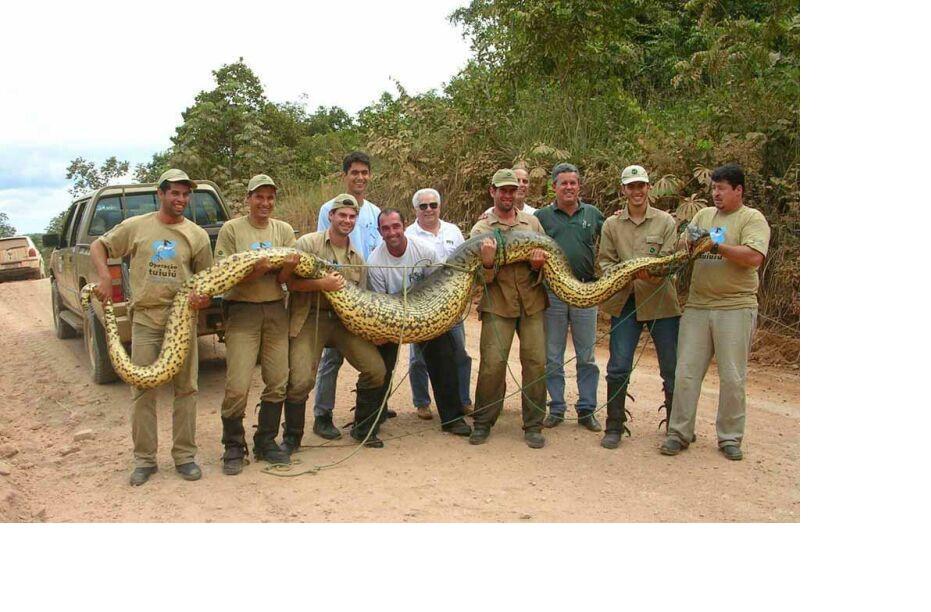
The Boa has nothing to do with the following about Juba:
Subject: Juba, as the SPLA take over, and the LRA are on the way out
In Juba, everyone knows that the LRA was based just 10 km beyond the radio station at Gumbo, at the junction that used to lead to Uganda through Nimule or to Kenya through Torit. I went up to Gumbo yesterday crossing the bridge (controlled by the SPLA since last week) into a few km stretch (still controlled by Government soldiers, who will be gone before long). The whole area before the bridge, formerly a busy market and place to catch buses was cleared during the war/siege which cut Juba off from the rest of the world.
The East Bank road (if you think of it, part of the Cape to Cairo highway) is overgrown; the new university buildings which the Northern army is about to quit are seen in the distance.
Juba-Yei road is already open and quite busy, with vehicles with Congo, Uganda and SPLM registrations all arriving, and prices falling as the market re-orients itself to be supplied from the south by road rather than from the north by air (though some barges with food and a small number of returnees have also started arriving).
The LRA was well-known to be directly supported by the Northern government and as the SPLA consolidates its hold on Juba, they have given them notice to quit – which is what one part did last week already rampaging its way to Congo (and leading to security problems in Yei) and then, it appears, hoping to surrender to MONUC . It was such common knowledge about the LRA in Juba and who supported it that it makes Uganda’s explanations about why they are not defeated pretty thin – it just needed political will.
So, because of the funeral of John Garang, the SPLA have made a peaceful entry into Juba and even in the two days I have been here control has shifted, day by day, into the hands of the new GoSS (President Salva, VP Riek) from the GoS now known as the GoNU (Government of National Unity).
Some things are not sorted out – Central Equatoria State (there are ten southern states now) will have its capital in Yei? Or in Juba? What will be the GoSS roles vis a vis States’ powers? If we try to solve a problem in Juba we are just helping one state … unless we talk to GoSS, but it is not clear at the moment when their Ministers are not appointed how it will work out.
Tellingly, when we were arranging to go to Torit (fly only - very land-mined road) one UN person said to another, but we haven’t got security clearance from XX – the answer, no point, he’ll be back in Khartoum soon, he has no power any more.
Yesterday SPLA troops moved into the radio Juba compound, a few days ago the SRRC took over from HAC (the Northern Humanitarian Affairs Commission). Now the SRRC travel document allows you temporarily to move and work everywhere in the south.
The UN peace-keeping force is starting up, flights to places we never dreamed of reaching other than by road years ago. Lafon, and Bor, for instance. Military Observers (Norwegian police in Equatoria) in smaller and smaller towns, though there is no seeming likelihood of war again. Big UN cars in Juba. Can’t be long before the Cultural Centre (by day), bar and disco (by night) revives. Meanwhile accommodation is very difficult to find and since almost all Arab shops in Malakiya and the Konyo Konyo market were burned at the time of Garang’s death, setting up a programme in education would require a lot of expensive importing (by air or barge from Khartoum) or by road from Uganda until trade routes re-establish themselves. It was very similar when I first arrived in Bunia. (Afex, the people who set up tented cities for UN and NGO people already have more than fifty tents, on the river bank, full all the time. )
You can now fly UN to Loki in Kenya, and since Entebbe will start up as the logistical base this week, there will no doubt be flights there too.
I saw Juba Day school yesterday. The chairs in the staff room and head master’s office are still in the same position as when I left 20 years ago! Now nearly 1500 students of 4 secondary schools are in the one compound, but it is ordered and disciplined. Since one of these schools is Yei Day school it can be a test case – the best help may not be to increase the size of Juba Day, but to help these three schools to go home. Another is Kajokaji secondary school one of the many offshoots of that school which was twice (at least) forced to flee as boys were forcefully press-ganged in the SPLA). There is the huge Comboni secondary school in Kajo Kaji itself, so Kajokaji secondary school in Juba may now be more of an ‘orphan’ school.
All state primary schools except one (Buluk A) now run in Arabic but the private school sector is said to have 45 schools operating in English (including St Joseph’s, one of the biggest). It may well be that most children actually attend school in English. Similarly the 1500 attending in English in Juba Day are not a tiny minority but a significant portion of the secondary population. Of course figures are always misleading as the UNICEF man pointed out to us the difference between enrolment and attendance can be a factor of 2 or more (a rare admission from UNICEF, but he is an engineer!)
With the opening of the Yei road and the gradually opening of other roads (Rokon is accessible, Terekeka too) there will be population movements in both directions, and that will change things too.
All this after two days!
==
UNHCR here have changed my programme so that we can have the proposals all wrapped up before I go, meaning that I will not get to other destinations on this trip – a bit of a waste of my time, since the main conclusions are all ready, but I have to wait for Tim Brown and my other colleague (also a Paul M) to get back from Lokichoggio where they attended a big education strategy meeting. If theymake it today, I may be able to visit one other place.
Interesting potential for disagreement between the Juba people who see themselves as heroes for having lived through 20 years of hell (and it was very grim) and the SPLM who believe they should be grateful for being liberated (and incidentally should give up their posts and jobs to the incoming SPLMs who ‘enjoyed’ -- according to Juba people -- in exile). It will be resolved though; there is a huge amount of goodwill. There’s a PhD here for someone to study what 20 years of ‘enclavement’ do to a population.
We are all waiting for someone to release the 1.5 BILLION dollars promised as start up money for the new Southern government. No sign of any of it, of course. Lost in some UN black hole called the Trust fund. Sounds familiar?
Still, it is great to be back, to walk around with no security worries, even though SPLA are everywhere with their guns. Every second person is a former student, and I have really been made welcome. Echo Bravo could start up at the drop of a hat, and may well do so. My proposal for training to British Council/AET/DfID has made the short-list. Meanwhile I still represent Windle Trust who will be partners with UNHCR for the education of returnees, and with the authorities for upgrading the teachers and converting many of them from teaching in Arabic to teaching in English.
This is one of the few countries where UNHCR deals with returnees and they are just feeling their way on education. Every instinct tells them that they should just drop the returnees at the border with a $22 dollar bag of pots and pans and a plastic sheet, but they are being asked to think ahead when it comes to education. Just like UNICEF when it started education – they couldn’t see beyond the vaccination mentality. (Let’s inject you with maths today, Geography tomorrow).
I was in Yei just after the LRA attack – that was tense (and if I had been UN, I couldn’t have been there, shades of Uganda ladies in Hargeisa).
OCHA here are superb – free internet access (you have to fight your way to the connections though among assorted NGO, hi-powered UN visitors and Italian nuns (they usually win)).
Went on a helicopter mission with OCHA to Torit – found the road from Kenya (Loki) is now de-mined and open to there; the road from Uganda is open to Juba and prices are already dropping in the market. There’s a PhD here for someone to study what 20 years of ‘enclavement’ do to a population.
For blog and website
At the beginning of 2005, I was finishing a consultancy for Windle Trust on ‘Training for the new South Sudan’. During the year I did a total of eight months in Somaliland mainly for AET and UNESCO-PEER (with brief forays to Puntland) and an interesting two weeks back in Congo for War Child.
Now, as 2006 starts, I am based until the beginning of February in Juba, working for Windle Trust on a project for UNHCR to help youth who have started coming back to Sudan, even before the official repatriations. Most of them were refugees in Uganda.
We are training them to be emergency English teachers, since Juba has become a very Arabised town during its years of isolation. Inevitably, they are mainly male, since the first ‘venturers’ in these situations will usually be boys and men. A surprise was that they were older than expected (but the war has gone on for 20 years). We are also supporting the English medium schools to take more students.
It was, you can see, a year of going back. Well, in my kind of work that is inevitable. The Tahiti, and Bangkok and Shangri-la jobs never seem to come up. By taking up the job in Hargeisa, I was re-occupying the role I had in 1997 and 1998 as Head of Office (though this time I did not cover Djibouti). Though I had actually been appointed as Project Manager of the large Secondary Programme – which I had been involved in designing, in the early stages, I ended up, once again, handling financial records, and large sums of cash. I got very little time to look at the actual quality of teaching, and I was dealing with the same Ministry of Education I had worked with before, who in contrast to the Ministries in South Sudan, never seem to have education as their main focus.
For Congo, it was a chance to work on education; in both my jobs there I had been head of a sub-office with little chance to do much education work (apart from HIV/AIDS). The main education work I did there was the ‘Back to School’ project after the volcanic eruption in 2002 which destroyed 41 schools. So this time, I went to South Kivu, for War Child Canada and War Child Holland.
As for Juba, Sudan, it was back after 20 years to a town stuck in a time warp. Apart from my additional weight (kilos, not authority), there is nothing different between my time in Juba in the early eighties and now. I am even riding a motor-bike (actually there is less tarmac than the 6 km there used to be).
Perhaps it is actually a little hotter (the surrounding areas have no vegetation after years of being cut off). And, yes, the University is no longer there. It flitted to Khartoum in 1989 when Juba was on the point of starvation. There are mobile phones, in theory, but they hardly ever work, the electricity is just as poor as ever, and, as before, it doesn’t do to look too closely at the water. I live in a grass-thatched tukul (= hut) in the middle of town on the compound we have been given by the Ministry because the accommodation is too expensive (and it was impossible to rent for short-term).
There is hope though that it will change. Next week marks one year since the Comprehensive Peace Agreement was signed. Some oil money is filtering through from Khartoum, though it still seems to be stuck at the Government of South Sudan level. The next level down, the ten States, still don’t have funds to spend. Contracts have been issued for roads and electricity.
The roads are, nevertheless, full of posh Government of South Sudan cars (and South Africa gave GoSS two passenger planes). The GoSS vehicles outnumber the agency vehicles (though UN agencies and UNMIS, the peace-keepers, mainly Bangladeshis in Juba make up a lot of the traffic).
Every kind of number plate is seen from the Arabic/Latin plates of Juba, to the ‘NS’ of New Sudan, the Congo plates sold in Ariwara and Aru as a local income-generating activity, Uganda numbers and others.
Since the road from Yei opened, a huge new market has grown up at Custom, where the road from Yei enters Juba, still the only viable road because of the presence of the LRA between Torit and Juba. At Custom, Fellata traders (Hausas) from Western Sudan trade alongside young Sudanese brought up in Uganda and prices oscillate between items brought from the north and items brought from East Africa.
Uganda money and Sudanese dinars are both accepted at Custom, and Rwenzori water from Uganda has replaced bottled water from the north (since everything from the north still comes by plane – the barges have only fitfully resumed). Prices are horrendously high, but that is mainly because of the huge demand from the agencies setting up in Juba. (The GoSS has said that every agency must have decision makers based in Juba, not in Khartoum or East Africa). There has been a good side – for the first time for 20 years there is new employment in Juba and, for instance, anyone who can drive either drives a hire car at $100 a day or has got a job with an agency. The more educated are also being swept up by the UN.
So far the tensions usually experienced between returnees (‘we suffered in exile’) and stayees (‘we suffered while you enjoyed in Uganda/diaspora’) have not been too evident, though they will definitely arise as less educated stayees (or fighters in the civil war) find all the jobs taken by the educated who were outside. It has more or less happened already at Ministerial level. [Yes, stayee is a new – to me – agency word used for those who never left for one reason or another].
Boda bodas are coming in and supplementing the one bus route (same as in 1981), though the population of Juba regards them with suspicion (too fast, these boys might abduct you or rob you, or give you AIDS- a commonly expressed fear about the returnees).
The Thuraya satellite telephone is king – every SPLM/GoSS cadre has one, though this may change if new mobile companies come in. I wish I had shares, as at up to $3 a minute it must be a most lucrative business.
Juba is full of my former students, some returning like me. The school I was involved in founding in 1981 is still running, in English medium, and, rather coincidentally (but not bad for the image) UNHCR was giving the school things when I arrived. The Windle Trust project is also helping them.
One of my first students, Onesimo, is now Pastor Onesimo and father of five sons. To him, being cut off for twenty years (when other classmates had got out) has left him struggling to catch up. He came for Christmas to Entebbe, and started getting up to speed on e-mail (the first public e-mail opened less than 6 weeks ago in Juba) and internet.
The situation of Juba (and the other garrison towns) is fascinating. They are still under Khartoum for the moment, and, in spite of our assumptions, it is not obvious to them that they should join the SPLM/GoSS system without some discussion.
In education it is made even more complicated by the fact that the GoSS Minister of Education, is not from the SPLA but, though a Southern Christian from Raga, named by the National Congress party (as specified in the CP Agreement).
Students who study in Arabic in Juba want to take the Khartoum exams (the SPLM side still has not provided a secondary exam) and go to University in Khartoum.
Oh, and there are two armies – the government army in the barracks and the SPLA camped near Custom (and near John Garang’s grave). By the time I left the SPLA had still not been paid (though the government army is).
4TH Feb
Yesterday we drove in the evening to Rejaf West. (East is still problematic - the LRA are on that side. Many on the East side are displaced; for some years now the Congolese community there has been living on a miserable patch of land near Konyokonyo with no access to their farms).
> Curiously you still pass through Northern army check-points; not SPLA. They don't stop you and are quite friendly - only two or three soldiers at each. At Lilogo you pass the refugee camp for Anywak refugees (100 of them ended up in Juba somehow after the killings in Gambella - tall and black Ethiopians speaking a language like Acholi). Then the Dinka women's transit camp - the Dinka men, expelled from Western Equatoria, went ahead with their cattle, to Bor. The international community looks after their wives and children (but it's a very transient, bleak, open place.)
Djibouti was like that. The Somali men were all doing good jobs in the
> Gulf while leaving UNHCR and UNESCO to look after their wives and children. They came back once a year to keep the population growing. There is virtually nothing now at Rejaf West. I was told the expatriate graves (from Emin Pasha's time and later) are still there. So is the hill, of course, and it looks as though Taban lo Liyong's road continues a bit - but it may be an informal reopening not of that Kajo Kaji-bound road but of the old Route Royale, the Belgians
> attempt to get a foothold on the Nile, which joins the Juba-Yei road somewhere
> like Kagwada. (by the way with the rebuilding and de-mining Juba Yei is now taking less than 4 hours.
I looked for where we used to picnic, but the river was high and there were no exposed stones to be seen. I hadn't realised that they could actually disappear under the water. The banyan trees are also there.
Yes, a DJ from Kiryandongo camp was lost when I asked him to be the translator for non-English speaking youth in the Echo Bravo Youth Club we are setting up.
Unfortunately that's the language they are usingon the radio.
Simple example: Everyone in Juba says moya barda / moya sukhna now. When I was there it was moya barid /sukun
And the lad working around my hut - whose father used to work for British Council - has his telephone (largely a prestige object in Juba since the mobile system hardly works)set to Arabic script and can't look up any words in your dictionary because he has not mastered the English alphabet, though he is in secondary school.
We are working on him (and the rest of them).
Monday, January 03, 2005
Friday, December 06, 2002
Mai mai are in Congo. And
Maji maji (same thing) were in Tanzania.
The Mai mai go back a long way. They fought Tippu Tib,
and the Belgians. Water, or shea butter oil protect
them from bullets. And they have recently developed a
penchant for going naked. Usually a baseball cap, an
AK47 and absolutely nothing else.
Who was the French philosopher who said (early last
century) that if the young soldiers march the streets
of Paris with weapons of death we applaud. If they
walked displaying the instruments of life, they'd be
arrested?
Did you know that Life is a sexually transmitted
disease?
Maji maji (same thing) were in Tanzania.
The Mai mai go back a long way. They fought Tippu Tib,
and the Belgians. Water, or shea butter oil protect
them from bullets. And they have recently developed a
penchant for going naked. Usually a baseball cap, an
AK47 and absolutely nothing else.
Who was the French philosopher who said (early last
century) that if the young soldiers march the streets
of Paris with weapons of death we applaud. If they
walked displaying the instruments of life, they'd be
arrested?
Did you know that Life is a sexually transmitted
disease?
Subscribe to:
Posts (Atom)